Minecraft’s diverse biomes fundamentally shape gameplay, offering unique challenges and opportunities for adult players. This comprehensive guide breaks down each biome’s characteristics, strategic advantages, and building considerations for experienced builders and explorers.
Understanding Minecraft Biomes
Biome Definition and Mechanics
In Minecraft, a biome is a specific area with its own environment. These areas can be hot, cold, wet, or dry. They also have special plants, animals, and resources. Knowing about biomes helps you plan where to explore and build.
Biomes are generated using complex algorithms that account for temperature, humidity, and altitude. This creates natural transitions between regions and determines which blocks, structures, and mobs generate in each area. For technical players, each biome has specific numerical identifiers (Biome IDs) that can be referenced when using commands or modifying world settings.
How Biomes Impact Gameplay
Biomes influence every aspect of the Minecraft experience:
- Resource availability – Each biome contains unique materials and blocks
- Mob spawning rates – Different hostile and passive creatures appear based on biome type
- Survival challenges – Temperature effects, terrain difficulty, and natural hazards vary
- Building opportunities – Landscape features create distinct architectural possibilities
- Exploration rewards – Structures and rare items are distributed differently across biomes
Understanding these impacts allows for more strategic gameplay decisions, particularly for long-term world development and base planning.
Biome Mob Spawning Guide – Updated for 2025
| Biome | Hostile Mobs | Passive Mobs | Special Spawn Conditions |
|---|---|---|---|
| Plains | Zombie, Skeleton, Creeper, Spider | Cow, Sheep, Pig, Chicken, Horse | Horses spawn exclusively here and in savannas |
| Forest | Zombie, Skeleton, Creeper, Spider, Witch | Cow, Sheep, Pig, Wolf, Fox | Wolves and foxes are unique to forests |
| Cherry Grove | Zombie, Skeleton, Creeper, Spider | Cow, Sheep, Pig, Fox | Fox spawning with cherry-themed particle effects |
| Desert | Husk (replaces Zombies), Skeleton, Creeper | Rabbit | Husks don’t burn in daylight |
| Mountains | Zombie, Skeleton, Creeper, Spider | Goat, Llama | Goats can ram players and mobs, powder snow effects |
| Swamp | Zombie, Skeleton, Creeper, Slime, Witch | Frog (3 variants), Tadpole | Frogs eat slimes, creating froglight blocks |
| Mangrove Swamp | Zombie, Skeleton, Creeper, Slime, Witch | Frog (warm variant), Tadpole | Warm frogs create pearlescent froglight |
| Ocean | Drowned, Guardian (monuments only) | Squid, Fish, Dolphin, Turtle | Guardians only spawn around ocean monuments |
| Deep Dark | Warden (vibration-triggered) | None | Warden spawns only when sculk shriekers activate |
| Pale Garden | Creaking (night only) | None | Creaking tied to pale oak logs, disappears in daylight |
| Dripstone Caves | Standard cave mobs | Glow Squid | Natural dripstone hazards from falling |
| Lush Caves | Standard cave mobs | Axolotl, Glow Squid | Axolotls require water pools |
| Nether Wastes | Zombie Piglin, Ghast, Magma Cube | Strider | Standard Nether biome with typical spawns |
| Crimson Forest | Piglin, Hoglin, Zombie Piglin | Strider (near lava) | Hoglins provide the only food source in Nether |
| Warped Forest | Enderman | Strider (near lava) | Safest Nether biome with minimal hostile mobs |
| Soul Sand Valley | Skeleton, Ghast | Strider (near lava) | Reduced movement speed, soul fire effects |
| Basalt Deltas | Magma Cube, Ghast | Strider (near lava) | Most difficult terrain navigation, ash particles |
| End Islands | Enderman, Shulker (End Cities only) | None | Shulkers only spawn in End Cities |
Comprehensive Biome Catalog
Overworld Biomes
The Overworld is the main world you explore. It includes many popular biomes, like:
Plains
- Temperature: Moderate
- Exclusive Resources: Horses, villages (common)
- Technical Details: Flat terrain with Y-variance typically ±3 blocks
- Building Advantage: Ideal for expansive structures requiring minimal terrain modification
Forest
- Temperature: Moderate
- Variants: Regular, Birch, Flower, Dark Oak
- Exclusive Resources: Bees, various wood types, mushrooms
- Technical Details: Tree density approximately 10-15 trees per chunk
- Building Advantage: Abundant wood access makes it excellent for early-game construction
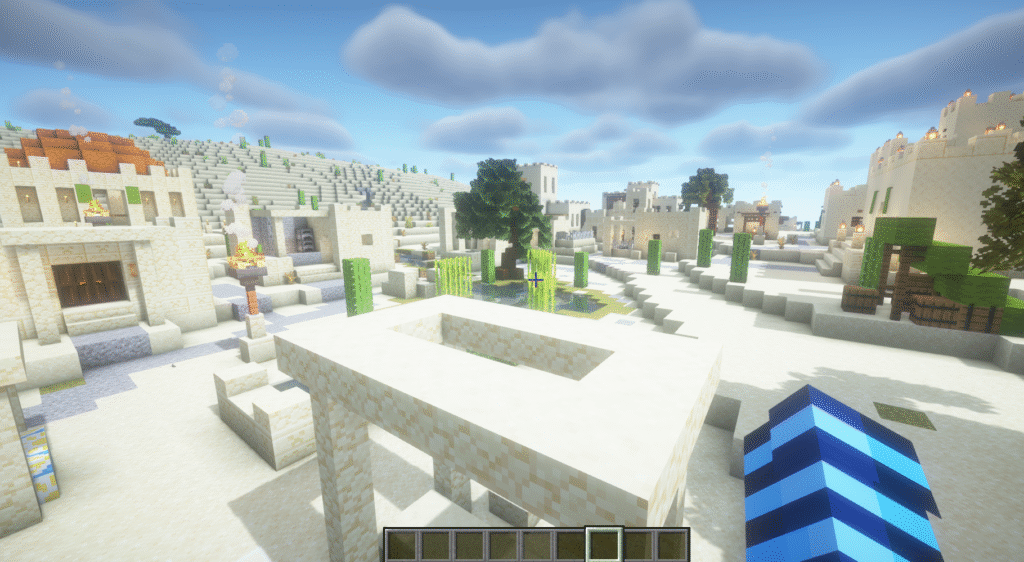
Desert
- Temperature: Hot
- Exclusive Resources: Dead bushes, cacti, desert temples
- Technical Details: Sand depth averages 4-7 blocks with stone underneath
- Building Advantage: Open sight lines with dramatic lighting for architectural highlights
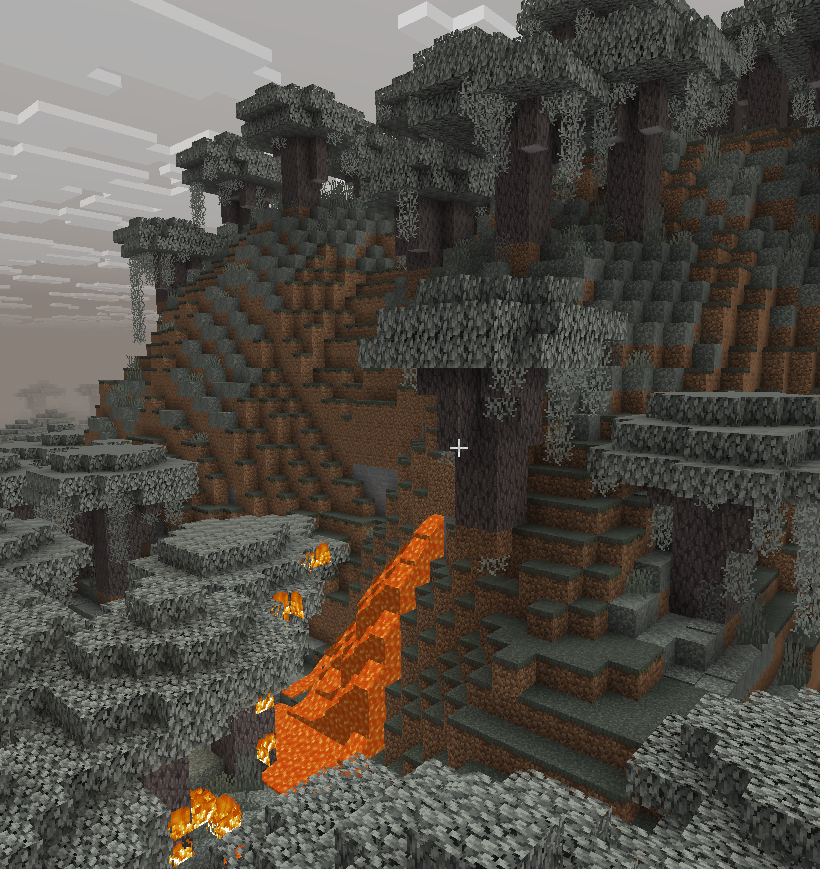
Taiga
- Temperature: Cold
- Variants: Regular, Snowy, Giant Tree
- Exclusive Resources: Wolves, spruce trees, sweet berries
- Technical Details: Includes both flat and mountainous variants with spruce dominance
- Building Advantage: Alpine aesthetics with natural spruce integration opportunities
Jungle
- Temperature: Hot
- Exclusive Resources: Cocoa beans, parrots, bamboo, melons
- Technical Details: Highest tree density with unique 2×2 jungle giants
- Building Advantage: Vertical building potential utilizing canopy levels
Mountains
- Temperature: Variable by elevation (Frozen Peaks, Jagged Peaks, Stony Peaks)
- Exclusive Resources: Emerald ore, goats, powder snow, deepslate variants
- Technical Details: Extreme height variation (Y-64 to Y320), distinct sub-biomes by elevation
- Building Advantage: Dramatic vistas with natural material transitions from deepslate to stone
Updated for 1.18+ generation: Mountain biomes now feature much more dramatic elevation changes with distinct sub-biomes. Deepslate generates below Y=0, creating natural basement areas. The new height limits allow for unprecedented vertical builds, while powder snow mechanics add both challenge and atmospheric effect for winter-themed construction.
Swamp
- Temperature: Moderate
- Exclusive Resources: Slimes, lily pads, witch huts, frogs (3 variants), tadpoles
- Technical Details: Water discoloration (
#4c6559), variable depth, frog breeding mechanics - Building Advantage: Atmospheric lighting with unique water aesthetics and amphibian life
Recent additions: Frogs now spawn in three color variants (temperate, warm, cold) and can be bred using slimeballs. Tadpoles add dynamic life to water features. The expanded ecosystem makes swamp builds more interactive and biologically realistic for nature-themed construction projects.
Ocean
- Temperature: Cold to Lukewarm
- Variants: Deep, Warm, Lukewarm, Cold, Frozen
- Exclusive Resources: Coral, shipwrecks, ocean monuments
- Technical Details: Variable depth with ravines and underwater caves
- Building Advantage: Underwater construction with natural lighting effects
Mangrove Swamp
- Temperature: Hot
- Exclusive Resources: Mangrove wood, mud blocks, propagules
- Technical Details: Water depth varies 1-3 blocks with mangrove root systems
- Building Advantage: Unique stilted architecture opportunities with natural root foundations
The mangrove swamp represents one of Minecraft’s most architecturally interesting biomes for adult builders. The naturally occurring root systems create organic support structures that can be enhanced rather than cleared. Mud blocks provide a softer alternative to clay and can be converted to packed mud for more refined construction.
Cherry Grove
- Temperature: Moderate
- Exclusive Resources: Cherry wood, pink petals, unique particle effects
- Technical Details: Pink particle effects create ambient lighting enhancement
- Building Advantage: Distinctive pink aesthetic perfect for Japanese-inspired architecture
Cherry Grove biomes transform the traditional forest building approach with their unique pink palette. The falling petal particles create a romantic atmosphere ideal for gardens, shrines, and contemplative spaces. Cherry wood’s pink tint pairs excellently with white concrete and quartz for modern minimalist builds.
Deep Dark
- Temperature: Cold
- Exclusive Resources: Sculk blocks, echo shards, swift sneak enchantment
- Technical Details: Ancient cities generate exclusively here, Warden spawning mechanics
- Building Advantage: Atmospheric lighting with sculk sensors for advanced redstone
The Deep Dark biome revolutionizes underground building with sculk family blocks that respond to vibration. Advanced builders can create interactive environments using sculk sensors, while the ancient cities provide inspiration for mysterious underground architecture. The biome’s inherent danger adds excitement to exploration and base establishment.
Pale Garden (Latest Addition – Winter Drop 2024)
- Temperature: Cold
- Exclusive Resources: Pale oak wood, creaking spawn mechanics, pale moss
- Technical Details: Creaking mobs tied to pale oak logs, unique day/night mechanics
- Building Advantage: Ethereal white/gray palette perfect for gothic and minimalist designs
The Pale Garden biome represents Minecraft’s most atmospheric biome addition. The pale oak’s whitened appearance creates opportunities for stark, haunting architecture. The Creaking mob mechanics add environmental storytelling potential, making this biome ideal for horror-themed builds or serene meditation spaces.
Underground Biomes
The Caves & Cliffs update introduced distinct underground biomes that fundamentally changed subterranean building strategies.
Dripstone Caves
- Exclusive Resources: Pointed dripstone, calcite blocks, dripstone blocks
- Technical Details: Natural water collection systems, stalagmite/stalactite formation
- Building Advantage: Natural architectural elements with functional water features
Dripstone caves provide builders with natural water collection and unique ceiling/floor textures. Pointed dripstone can be harvested and repositioned for custom cave aesthetics, while calcite offers a clean white alternative to quartz for underground builds.
Lush Caves
- Exclusive Resources: Moss blocks, glow berries, azalea trees, spore blossoms
- Technical Details: Natural lighting from glow berries, moss spreading mechanics
- Building Advantage: Self-sustaining underground gardens with natural food sources
Lush caves revolutionize underground building with their garden-like atmosphere. Glow berries provide both lighting and food, while moss blocks can be used with bonemeal to create natural carpeting. Spore blossoms add particle effects that enhance atmospheric underground spaces.
Nether Biomes
The Nether is a dark and fiery place. It has unique biomes, such as:
Crimson Forest
- Exclusive Resources: Crimson fungi, weeping vines, crimson nylium
- Technical Details: Hoglins spawn exclusively here, piglins common
- Building Advantage: Rich color palette with natural red lighting
Warped Forest
- Exclusive Resources: Warped fungi, twisting vines, warped wart
- Technical Details: Only endermen spawn naturally, safest Nether biome
- Building Advantage: Open spaces with atmospheric blue-green aesthetic
Soul Sand Valley
- Exclusive Resources: Soul soil, soul sand, basalt
- Technical Details: Reduced movement speed, skeletons and ghasts common
- Building Advantage: Height variation with natural sound effects
Basalt Deltas
- Exclusive Resources: Basalt columns, magma blocks
- Technical Details: Most difficult terrain navigation, ash particles present
- Building Advantage: Dramatic volcanic aesthetics with natural black and orange contrast
Nether Wastes
- Exclusive Resources: Nether quartz ore, glowstone clusters
- Technical Details: Original Nether biome, standard spawn point
- Building Advantage: Open spaces suitable for large-scale construction
💭 Underground vs. Surface Building
With the addition of Lush Caves and Dripstone Caves, underground building has become incredibly appealing. Which building style do you prefer and why?
Poll Results:
Total Votes: 0
End Biomes
The End is a mysterious place. Here, you find:
End Islands
- Exclusive Resources: End stone, chorus plants, purpur
- Technical Details: Void gaps between islands, endermen spawning
- Building Advantage: Floating construction opportunities with dramatic void backdrops
End Highlands
- Exclusive Resources: End rod materials, ender dragons
- Technical Details: Contains the central island and exit portal
- Building Advantage: Central hub potential with circular design opportunities
End Midlands
- Exclusive Resources: Enhanced chorus plant generation
- Technical Details: Transitional areas with variable elevation
- Building Advantage: Interconnecting pathways with natural height variation
End Barrens
- Exclusive Resources: Limited resources, primarily end stone
- Technical Details: No chorus plant generation, sparse features
- Building Advantage: Minimalist landscape for contemporary architectural styles
Strategic Resource Collection by Biome
Essential Resources and Their Biomes
Optimizing resource collection requires understanding biome-specific sources:
Essential Resources and Their Biomes – Updated for 2025
| Resource | Primary Biome | Secondary Biome | Collection Notes |
|---|---|---|---|
| Oak Wood | Forest | Plains | Most versatile wood type, common crafting material |
| Spruce | Taiga | Snowy Taiga | Excellent for rustic builds, darker planks |
| Cherry Wood | Cherry Grove | – | Pink-tinted wood, perfect for Japanese-inspired builds |
| Mangrove Wood | Mangrove Swamp | – | Reddish wood with unique root system integration |
| Pale Oak | Pale Garden | – | White/gray wood ideal for minimalist and gothic architecture |
| Bamboo | Jungle | – | Fastest growing, useful for scaffolding and fuel |
| Sand | Desert | Beach | Essential for glass, concrete, and TNT |
| Clay | Swamp | River | Required for bricks and terracotta |
| Mud | Mangrove Swamp | – | Soft building material, converts to packed mud |
| Emerald Ore | Mountains | – | Only spawns in mountain biomes, valuable for trading |
| Copper Ore | All Overworld | Stone level (Y0-96) | Oxidizes over time, multiple aesthetic stages |
| Deepslate | Deep Underground | Below Y=0 | Replaces stone, darker aesthetic, multiple variants |
| Sculk Blocks | Deep Dark | – | Vibration-sensitive, unique for redstone applications |
| Coral | Warm Ocean | – | Decorative blocks with unique colors |
| Glow Berries | Lush Caves | – | Natural lighting and food source |
| Pointed Dripstone | Dripstone Caves | – | Decorative spikes, water collection functionality |
| Nether Quartz | Nether Wastes | All Nether Biomes | Essential for redstone components and decorative blocks |
| Ancient Debris | All Nether Biomes | – | Found at Y-levels 8-22, optimal at Y=15 |
| Echo Shards | Deep Dark (Ancient Cities) | – | Rare material for recovery compass crafting |
| End Stone | All End Biomes | – | Primary building material in End dimension |
| Chorus Fruit | End Highlands | End Midlands | Used for crafting End rods and purpur blocks |
| Slime Balls | Swamp | Underground (slime chunks) | Essential for pistons, slime blocks and sticky mechanisms |
Rare and Unique Biome-Specific Items
For collectors and completionists, these rare items require targeted biome exploration:
- Nautilus Shells – Beach (from drowned), Ocean Monuments
- Heart of the Sea – Buried Treasure (primarily in Beach biomes)
- Ancient Debris – Nether (all biomes, optimal at Y=15)
- Shroomlight – Crimson/Warped Forest (Nether)
- Dragon’s Breath – End (during dragon fight)
- Shulker Shells – End Cities (End Islands)
Optimal Mining Strategies for Each Environment
Mining efficiency varies significantly by biome:
Mountain Mining
- Y-levels -54 to -59 for optimal diamond mining
- Check exposed cliffs for visible ore veins
- Explore mountain caves for reduced digging requirements
Desert Mining
- Use exposed ravines to access deeper levels quickly
- Desert temples often have valuable loot to supplement mining
- Sand collapse risk requires more careful tunneling
Nether Mining
- Use bed explosions for efficient ancient debris collection at Y=15
- Create safety tunnels to avoid lava pockets
- Strip mine in straight lines rather than branches due to lava prevalence
End Mining
- Focus on end cities rather than traditional mining
- Use silk touch for end stone collection
- Bridge between islands with scaffolding for efficient travel
Deep Dark Mining
- Requires extreme caution due to Warden spawning mechanics
- Focus on ancient city loot rather than traditional mining
- Use wool blocks to muffle movement and avoid vibration detection
- Swift Sneak enchantment essential for efficient navigation
- Echo shards only available here, required for recovery compass
Advanced Building Techniques for Different Biomes
| Resource | Primary Biome | Secondary Biome | Collection Notes |
|---|---|---|---|
| Oak Wood | Forest | Plains | Most versatile wood type, common crafting material |
| Spruce | Taiga | Snowy Taiga | Excellent for rustic builds, darker planks |
| Bamboo | Jungle | – | Fastest growing, useful for scaffolding and fuel |
| Sand | Desert | Beach | Essential for glass, concrete, and TNT |
| Clay | Swamp | River | Required for bricks and terracotta |
| Emerald Ore | Mountains | – | Only spawns in mountain biomes, valuable for trading |
| Coral | Warm Ocean | – | Decorative blocks with unique colors |
| Nether Quartz | Nether Wastes | All Nether Biomes | Essential for redstone components and decorative blocks |
| Ancient Debris | All Nether Biomes | – | Found at Y-levels 8-22, optimal at Y=15 |
| End Stone | All End Biomes | – | Primary building material in End dimension |
| Chorus Fruit | End Highlands | End Midlands | Used for crafting End rods and purpur blocks |
Material Selection and Aesthetic Harmony
Achieving visual coherence requires selecting materials that complement the natural biome palette:
Plains Palette
- Primary: Oak, Stone, Cobblestone
- Accent: Hay Bales, Yellow/Green Terracotta
- Contrast: Dark Oak, Deepslate
- Lighting: Lanterns, Campfires
Desert Palette
- Primary: Sandstone, Terracotta, Smooth Sandstone
- Accent: Cut Sandstone, Brown Wool
- Contrast: Dark Prismarine, Blackstone
- Lighting: Soul Lanterns, Shroomlights
Taiga Palette
- Primary: Spruce, Stone Bricks, Cobblestone
- Accent: Podzol, Stripped Spruce
- Contrast: Deepslate Tiles, Calcite
- Lighting: Lanterns, Soul Campfires
Jungle Palette
- Primary: Jungle Wood, Mossy Stone, Leaves
- Accent: Bamboo, Green Terracotta
- Contrast: Mud Bricks, Mangrove
- Lighting: Torches, Glowberries
Environmental Challenges and Solutions
Each biome presents unique building challenges requiring technical solutions:
Mountain Building
- Challenge: Extreme elevation changes
- Solution: Terraced foundations with retaining walls
- Technical Approach: Use slabs and stairs for gradual elevation transitions
Desert Building
- Challenge: Lack of natural water and wood
- Solution: Create oasis centerpieces with imported materials
- Technical Approach: Underground water storage with bubble column elevators
Swamp Building
- Challenge: Unstable waterlogged terrain
- Solution: Stilted buildings with elevated pathways
- Technical Approach: Use fence posts and logs for support pillars
Nether Building
- Challenge: Limited block palette, hostile environment
- Solution: Incorporate natural terrain features like basalt columns
- Technical Approach: Use fire-resistant materials with ghast protection
Biome-Specific Color Palette Mastery
Understanding the natural color theory behind each biome allows for sophisticated building that feels organically integrated rather than imposed upon the landscape.
Color Temperature Analysis by Biome
Warm Biomes (Desert, Savanna, Badlands)
- Primary Palette: Terracotta family (
#D2691Eto#F4A460), sandstone variations - Accent Colors: Deep oranges, burnt umbers, gold highlights
- Contrast Strategy: Cool blues and purples for dramatic effect
- Advanced Technique: Layer different terracotta shades for natural weathering effects
Cool Biomes (Taiga, Snowy Plains, Frozen Ocean)
- Primary Palette: Blue-grays (
#708090), white concrete, light blue terracotta - Accent Colors: Deep blues, silver highlights, ice blue
- Contrast Strategy: Warm wood tones (spruce, dark oak) for cozy elements
- Advanced Technique: Use blue ice and packed ice strategically for light refraction
Neutral Biomes (Plains, Forest, Mountains)
- Primary Palette: Stone variations (
#696969to#DCDCDC), natural wood tones - Accent Colors: Earth tones, moss greens, sky blues
- Contrast Strategy: Bold colors sparingly for focal points
- Advanced Technique: Create depth with subtle shade variations within the same color family
New Biome Color Innovations
Cherry Grove Aesthetic Integration
- Signature Pink:
#FFB6C1(Light Pink concrete/terracotta approximation) - Complementary Palette: White concrete, light gray, natural stone
- Building Applications: Japanese-inspired architecture, romantic gardens, zen spaces
- Pro Tip: Use cherry leaves as natural “stained glass” for filtered lighting effects
Pale Garden Minimalism
- Signature Whites:
#F8F8FF(Ghost White – white concrete),#DCDCDC(Gainsboro – light gray) - Monochromatic Strategy: Layer different white/gray blocks for texture without color distraction
- Building Applications: Modern minimalist, Scandinavian design, gothic architecture
- Pro Tip: Use pale oak wood sparingly as the only warm accent in an otherwise cool palette
Deep Dark Atmospheric Building
- Signature Darks:
#000000(Black – blackstone),#36454F(Charcoal – deepslate variants) - Bioluminescent Accents: Sculk blocks, soul fire, end rods
- Building Applications: Underground cities, sci-fi bases, mysterious temples
- Pro Tip: Sculk sensors can create interactive lighting systems that respond to movement
Mangrove Swamp Organic Architecture
- Signature Browns:
#8B4513(Saddle Brown – mangrove wood),#A0522D(Sienna – mud blocks) - Water Integration: Use water as a design element, not obstacle
- Building Applications: Stilted homes, boardwalk systems, eco-friendly structures
- Pro Tip: Mangrove roots create natural pillar systems – build around them rather than removing them
Advanced Lighting Design by Biome
Lighting in Minecraft building extends far beyond preventing mob spawns. Each biome offers unique lighting opportunities that can transform architectural experiences.
Ambient Lighting Strategies
Natural Light Amplification
- Cherry Grove: Pink-tinted natural light creates warm midday ambiance
- Pale Garden: Overcast lighting ideal for moody, contemplative spaces
- Deep Dark: Absence of natural light makes artificial sources dramatically impactful
- Mangrove Swamp: Filtered sunlight through leaves creates dappled effects
Artificial Lighting Integration
- Glow Berries (Lush Caves): Organic lighting that grows and spreads naturally
- Sculk Sensors (Deep Dark): Motion-activated lighting systems
- Soul Fire (Soul Sand Valley): Blue flames for otherworldly aesthetics
- Froglight Blocks (Swamp/Mangrove): Colored lighting (ochre, verdant, pearlescent)
Lighting Psychology for Adult Builders
Task Lighting: Bright, focused illumination for functional areas (workshops, farms, storage)
- Use sea lanterns, glowstone, or beacon pyramids
- Position at eye level (player perspective) for optimal visibility
Ambient Lighting: General illumination that sets mood and atmosphere
- String lights with item frames and glowing items
- Hidden lighting behind translucent blocks (glass, ice)
- Underwater lighting through glass floors
Accent Lighting: Dramatic highlighting of architectural features
- Backlit waterfalls using glowstone behind flowing water
- Silhouette lighting with strong contrasts
- Color-coded lighting systems using different sources
LEGO-Inspired Building Styles for Minecraft Biomes
Translating LEGO aesthetic principles to Minecraft creates distinctive building approaches:
Modular Construction
- Design buildings with standardized sections that can be replicated
- Use a consistent grid system (typically 4×4 or 6×6 blocks)
- Create swappable facades for visual variety
Micro-Detail Focus
- Use stairs, slabs, and trapdoors to create sub-block details
- Incorporate item frames with colored materials for texture depth
- Layer different block types for increased visual complexity
Color Blocking
- Define separate building sections with distinct color palettes
- Use concrete powder for subtle texture variations within color families
- Create contrast borders between major structural elements
| Biome | Common Building Materials | Best Building Styles | Notable Challenges |
|---|---|---|---|
| Plains | Wood, stone, hay bales | Farms, houses, windmills | Limited natural protection, flat terrain needs interest |
| Desert | Sand, sandstone, terracotta | Pyramids, temples, desert towns | Water access issues, limited wood sources |
| Forest | Oak, birch, mossy stone | Cabins, treehouses, hunting lodges | Clearing space, fire hazards, limited visibility |
| Mountains | Stone, andesite, deepslate | Cliff dwellings, mountain fortresses, observatories | Vertical building challenges, terrain navigation |
| Snow Biomes | Snow blocks, ice, spruce | Cabins, igloos, winter fortresses | Cold weather effects, limited plant variety |
| Ocean | Prismarine, glass, sea lanterns | Underwater domes, shipwrecks, lighthouses | Water removal, underwater lighting, breathing |
| Jungle | Jungle wood, leaves, bamboo | Treehouses, temples, canopy villages | Dense vegetation clearance, complex navigation |
| Swamp | Dark oak, mud bricks, lily pads | Stilted houses, witches’ huts, boardwalks | Irregular water, hostile mob spawning |
| Nether | Netherbrick, blackstone, basalt | Fortresses, netherbrick estates, lava-protected bases | Ghast protection, fire resistance, hostile environment |
| End | End stone, purpur, obsidian | Floating islands, alien architecture, void-spanning bridges | Void falls, limited palette, enderman management |
Terrain Integration Mastery
The mark of sophisticated Minecraft architecture is seamless integration with natural terrain rather than fighting against it.
Elevation Management Strategies
Hillside Integration
- Terracing: Create natural-looking level changes using slabs and stairs
- Retaining Walls: Use biome-appropriate stone types for structural support
- Drainage Solutions: Incorporate water features that follow natural flow patterns
Valley Construction
- Foundation Strategy: Build up from the lowest point rather than cutting down from high points
- Natural Amphitheaters: Use valley walls as natural sound reflectors for performance spaces
- Flood Management: Plan for water level changes and seasonal variations
Plateau Building
- Edge Treatment: Soften harsh cliff edges with overhangs and vegetation
- Access Solutions: Spiral paths, elevator systems, or bridge connections
- Wind Considerations: Open designs that acknowledge exposed positioning
Biome-Specific Terrain Challenges
Mountain Building Solutions
- Challenge: Extreme elevation changes and unstable snow/ice
- Solution: Stepped foundations that follow natural contours
- Advanced Technique: Use powder snow mechanics for hidden entrances and avalanche effects
Swamp Construction Adaptations
- Challenge: Irregular water levels and soft ground
- Solution: Floating foundations using lily pads and waterlogged blocks
- Advanced Technique: Create breathing buildings that rise and fall with water levels
Desert Stability Engineering
- Challenge: Sand collapse and lack of structural materials
- Solution: Hidden support systems using underground stone frameworks
- Advanced Technique: Oasis creation with imported water and vegetation management
Navigation and Exploration Mastery
Biome Transition Strategies
Moving from one biome to another can be tricky. Use these advanced techniques:
Waypoint System
- Place custom banners at major biome transitions
- Use distinctive block columns visible from distance (e.g., concrete pillars)
- Record coordinates in an in-game book for reference
Natural Navigation
- Identify “landmark” terrain features unique to each biome
- Use sun/moon position combined with F3 facing direction
- Follow rivers, as they often connect multiple biomes
Technical Navigation
- Use lodestone compasses for critical locations
- Create nether hub portals aligned to major biome centers
- Establish redstone distance markers for long journeys
Survival Tips for Hostile Environments
Advanced survival strategies by biome:
Desert Survival
- Carry water buckets for emergency hydration and fall protection
- Travel primarily at night to avoid overheating mechanics
- Create underground rest stops with farms
Jungle Survival
- Use machetes (swords with Sweeping Edge) to clear paths
- Build elevated platforms for visibility above canopy
- Mark explored areas with distinctive blocks to prevent getting lost
Nether Survival
- Always carry fire resistance potions
- Create cobblestone shelters when mining for protection from ghasts
- Use warped forests as safe zones for regrouping
End Survival
- Never look directly at endermen unless prepared for combat
- Bridge with scaffolding rather than blocks for quick removal
- Always have a water bucket for enderman defense and fall protection
Using Coordinates and Mapping Tools
Efficient exploration requires technical knowledge:
Coordinate System Mastery
- X/Z coordinates for horizontal positioning
- Y coordinate for elevation (build level)
- F3+G to show chunk boundaries for structure/spawning optimization
Advanced Mapping
- Use cartography table to create locked maps of key areas
- Create map wall room at base with complete coverage
- Color-code map markers by biome or resource
External Tools Integration
- World seed mapping with biome finders
- Structure location prediction using technical tools
- Slime chunk identification for farm planning
Building Cross-Platform: Java vs. Bedrock Biome Differences
Generation Variances and Planning Implications
Key differences between platforms affect biome strategies:
Java Edition
- More extreme terrain generation in mountains and caves
- Sharper biome transitions with occasional blending issues
- Different structure generation rules for villages and monuments
Bedrock Edition
- More gradual terrain with smoother biome transitions
- Different mob spawning rates, particularly in swamps and dark forests
- Varied structure generation distances from spawn
Planning Implications
- Build bridge foundations 1 block lower in Bedrock due to water level differences
- Account for different hostile mob spawn rates in base defense planning
- Adjust farm designs based on platform-specific mechanics
Platform-Specific Building Techniques
Optimizing builds based on platform advantages:
Java Advantages
- More predictable redstone behavior for technical builds
- Spectator mode for underground exploration planning
- Offhand block placement for more efficient building
Bedrock Advantages
- Bridging without crouching using front-face placement
- Moving storage blocks with pistons (containing items)
- Trident killers for AFK-friendly mob farms
Cross-Platform Compatibility
- Use universal redstone designs when building multiplayer worlds
- Avoid quasi-connectivity dependent machines on cross-platform servers
- Test crop growth timings when designing shared farms
Next Steps in Your Biome Mastery
Related Tutorials and Resources
Enhance your biome expertise with these related concepts:
- Custom Terrain Generation – Learn to use worldedit for biome terraforming
- Biome-Specific Redstone – Explore how environment affects mechanic design
- Advanced Weather Effects – Master thunder channeling and snow accumulation
Upcoming Biome Changes in Future Updates
Stay ahead of the curve with anticipated developments:
- Biome Blending Improvements – More natural transitions between regions
- Vertical Biomes – Different biomes at different elevations in the same column
- Enhanced Weather Systems – More impactful weather mechanics by biome
Whether you’re an experienced player or a beginner, knowing about biomes is essential. They shape your gameplay and strategies. Dive into each biome, explore its secrets, and enjoy the rich world of Minecraft!
By knowing what to expect in each biome, you can make the most of your time in Minecraft. Now it’s your turn to explore and discover!