Every Minecraft builder faces the same fundamental question before they place their first block: where should I build? The answer matters far more than most players realise. Your biome is not simply a backdrop — it is an active collaborator in your architecture, influencing your palette, your structural logic, your lighting conditions, and ultimately whether your build feels native to its world or oddly out of place. Choosing the wrong setting for a build style is a bit like designing a brutalist tower in a Cotswolds village. Technically possible, but working against yourself at every turn.
This architectural analysis cuts through each major biome category to match building styles with their ideal environments. Whether you are working in a grand medieval aesthetic, a sleek modernist idiom, or something altogether weirder, there is a biome that will make your work sing — and several that will quietly undermine it. Our complete guide to Minecraft biomes covers the full picture of resources and exploration; here we focus specifically on what each environment demands and rewards architecturally.
Why Biome Choice Is an Architectural Decision
Before diving into the pairings themselves, it is worth understanding what biomes actually contribute to a build. The obvious factors are palette and materials — warm sandstone against a desert sky, dark oak against a dense forest canopy. But the architectural impact goes deeper than colour.
Topography shapes your structural options. A flat plains biome lets you design from scratch, deciding every elevation change deliberately. A mountain biome forces your architecture into conversation with existing cliffs, which can produce genuinely spectacular results or become a constant battle depending on your approach.
Ambient lighting changes how your blocks read at different times of day, and some biomes have distinct fog effects that alter atmosphere entirely.
Scale reference matters too — towering jungle trees make human-scale builds look tiny, which is either a problem or an opportunity depending on your intent.
The builders who consistently produce the most compelling work tend to think of biome selection the way a film director thinks about location scouting. The environment should do half the storytelling.
Biome × Building Style Compatibility
Hover any rating for context. Filter by building style below.
| Biome | Classical | Gothic / Fantasy | Nordic / Alpine | Ancient Civils. | Modern / Brutalist | Vernacular / Folk | Industrial / Steampunk |
|---|---|---|---|---|---|---|---|
|
Plains
|
|||||||
|
Dark Oak Forest
|
|||||||
|
Birch Forest
|
|||||||
|
Jungle
|
|||||||
|
Desert
|
|||||||
|
Mountains
|
|||||||
|
Swamp
|
|||||||
|
Taiga / Snowy
|
|||||||
|
Ocean / Coastal
|
Plains and Grasslands: The Architect’s Blank Canvas
The plains biome is the most underrated choice for serious builders, precisely because it asks nothing of you. No dramatic cliff faces to work around, no canopy obscuring your rooflines, no extreme weather effects complicating your palette decisions. What you get instead is a neutral, well-lit stage where your architecture must stand entirely on its own merits.
Best For: Classical and Neoclassical Architecture
Symmetrical designs with grand proportions — government buildings, cathedrals, manor houses, town halls — find their natural home in the plains. The flat terrain lets you establish a proper ground plane and work upward in clear stages, which is essential for architectural styles that rely on vertical hierarchy and visible facades. Your entrance sequences can play out across distance in a way that cliff or forest builds simply cannot accommodate.
Modern urban planning also thrives here. If you are working toward a multi-district city build, the plains provide the expansion room and visibility sightlines that make district planning coherent. Our guide to building massive structures in Minecraft goes into the planning frameworks for projects at this scale, and virtually all of the foundational advice assumes the kind of open, controllable terrain the plains offers.
Best For: Farmhouse and Rural Settlement Aesthetics
The pastoral setting is self-evident, but the architectural opportunity is more specific than it might first appear. Plains villages in vanilla Minecraft establish a vernacular reference point that you can work with or deliberately contrast. Scattered farmsteads with working fields, market towns with mixed building heights, mill complexes beside rivers — all of these read as authentic and contextually grounded in ways that the same builds would struggle to achieve dropped into a mountain range.
Palette Considerations
The plains’ green and brown neutrality means you have enormous freedom with your building materials. Stone, brick, wood, and terracotta all read clearly without competing with an aggressive environment. This makes the plains the best biome for builders who are still developing their palette instincts, since the environment provides less interference with your decisions — for better and worse.
Forest Biomes: Organic Architecture and the Vertical Dimension
The various forest biomes — oak, birch, dark oak, old growth — each have distinct architectural characters, but they share a defining quality: the tree canopy creates an existing vertical structure that your builds must relate to. This is either the most exciting constraint in Minecraft building or the most frustrating one, and your reaction to that question is probably a good guide to whether forest building suits your style.
Dark Oak and Old Growth: Gothic and Fantasy Architecture
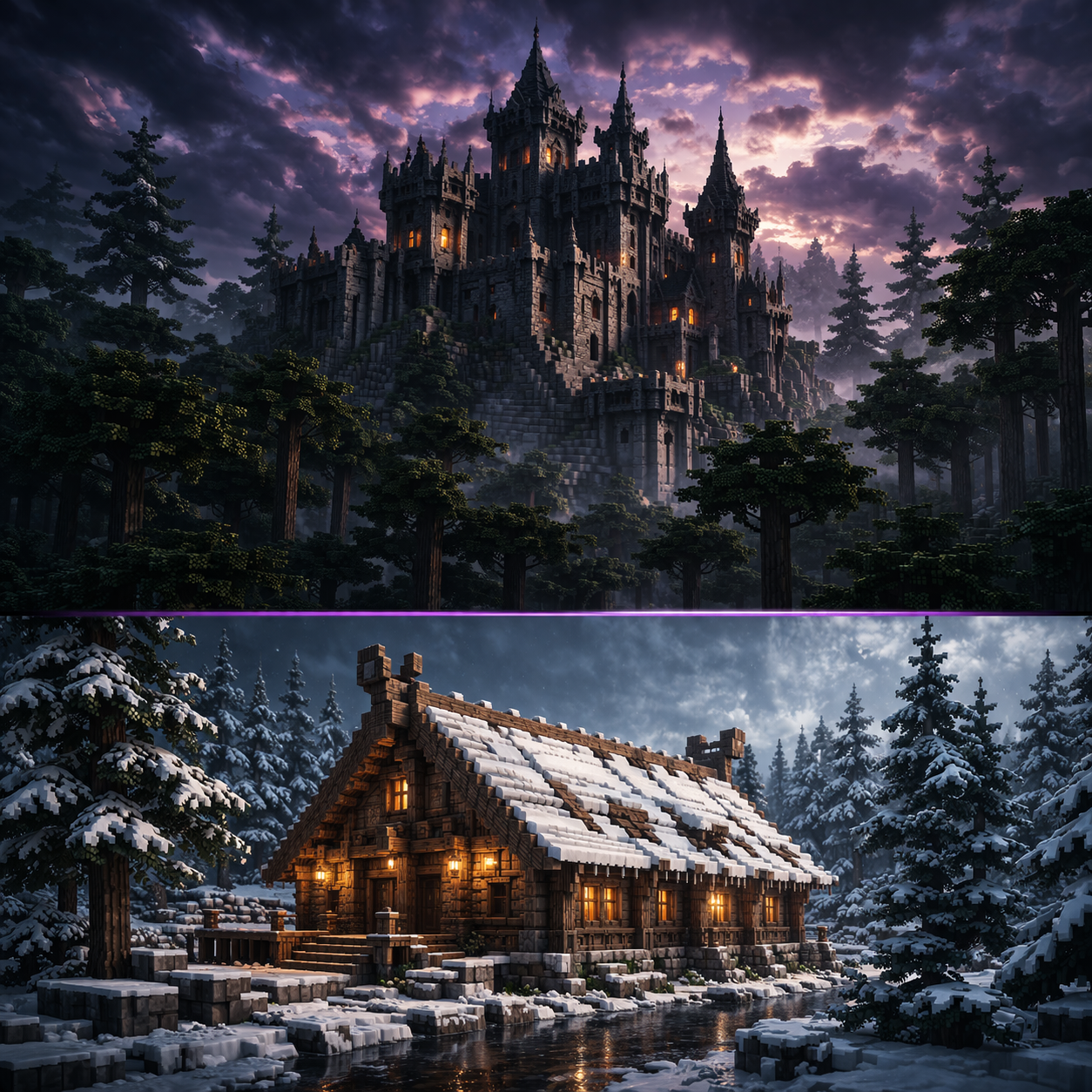
The dark oak forest’s dense, oppressive canopy and low light levels create an atmosphere that other biomes simply cannot replicate. Gothic architecture — pointed arches, flying buttresses, deep window reveals, towers that fight upward through the canopy — feels genuinely haunted here in a way that would seem theatrical placed in better-lit surroundings. The same dark oak wood that defines the biome also happens to be an exceptional primary building material for these styles, keeping your build in dialogue with its environment.
Fantasy and dark fantasy architecture more broadly finds this biome deeply sympathetic. Witch’s towers, forbidden libraries, cursed fortresses half-reclaimed by forest growth — the atmosphere does significant narrative work that you would otherwise have to create entirely through your building choices.
Birch Forest: Scandinavian and Contemporary Architecture
The birch forest’s pale trunks and bright, airy atmosphere sit at the opposite end of the emotional spectrum. This is where Nordic architecture finds one of its best overworld expressions, even before you reach the snowy biomes proper. Clean timber-framed structures, longhouse forms adapted for modern living, gallery-style buildings with large glazed openings — all of these benefit from the birch’s naturally refined, almost minimalist palette.
Contemporary Scandinavian residential architecture is particularly well-served here. White and light grey stone paired with stripped birch wood creates builds that feel genuinely considered rather than blocky.
The Jungle: Brutalist and Mesoamerican Architecture
The jungle biome’s overwhelming scale — those enormous trees, the thick undergrowth, the layered vertical space — creates a context that rewards only the most confident and monumental building approaches. Delicate or intricate architecture gets swallowed. What survives and thrives is massive, bold, and geometrically assertive.
Jungle biome building reaches its fullest potential with Mesoamerican-inspired temple complexes. The architectural language of tiered pyramids, ceremonial plazas, and processional routes maps directly onto what the jungle environment rewards: strong massing, clear silhouettes visible through dense foliage, and a sense of buildings being claimed by and in conversation with overwhelming vegetation. Building forest biome treehouse cities offers a different approach entirely — working with the canopy rather than against it, creating elevated communities that read the jungle’s scale honestly.
Desert Biomes: Where Ancient Architecture Lives
The desert occupies a unique position in Minecraft’s biome roster because it comes pre-loaded with architectural references. The sandstone palette, the pyramid structures, the temples — the game itself has already established that this is ancient-civilisation territory. Builders who work with that context, rather than against it, consistently produce the most compelling results.
Best For: Egyptian, Middle Eastern, and Ancient Mediterranean Styles
The case is almost self-evident, but there are specific architectural lessons worth drawing out. Desert biome architecture benefits enormously from the harsh, high-contrast lighting that the biome’s clear skies and bright sandstone produce. Deep shadow wells — those carved recesses in facade stonework that give ancient architecture its dramatic relief — read with exceptional clarity in desert conditions.
The smooth and cut sandstone variants, combined with red and chiselled sandstone, give you a material vocabulary that rivals real-world building traditions without requiring any imports from other biomes. Terracotta and glazed terracotta in warm tones complete a palette that feels indigenous rather than imported.
The Desert’s Overlooked Potential: Brutalist and Modernist Forms
Less obviously, the desert is also exceptional territory for a certain strain of contemporary brutalism. The stripped-back palette — essentially earth tones and smooth stone — combined with the harsh, unforgiving light and the vast horizontal plane creates conditions where heavy concrete-adjacent forms look genuinely spectacular. Think desert resort architecture, fortress-like research stations, or the kind of austere modernist buildings that photograph brilliantly against cloudless skies.
Desert oasis water features become architectural centrepieces in this context in a way they rarely do in biomes where water is abundant. A courtyard fountain or a series of reflecting pools carries enormous visual weight against all that dry stone.
Mountain Biomes: Dramatic Structural Challenges
Mountains are where Minecraft building gets genuinely difficult and genuinely spectacular. The steep terrain, the dramatic elevation changes, and the extreme scale of the environment mean that conventional architectural approaches often need significant rethinking. The builders who have produced the most iconic mountain work tend to be those who stopped trying to fight the terrain and instead learned to treat the cliff face as a building material.
Best For: Cliff-Integrated and Alpine Architecture
Cliffside builds — bases carved into rock faces, structures that cantilever over drops, bridges spanning gorges — are the mountain biome’s native architectural language. Mountain biome construction demands a fundamentally different planning approach to flatland building: you are working with existing geometry rather than creating your own, which requires more analytical thinking in the early stages and rewards it with dramatic results that would be impossible to fake on flat terrain.
Alpine architecture in the ski-resort tradition — chalet forms, log construction, steeply pitched roofs that read correctly against snowy peaks — works beautifully in the higher mountain variants. The Snowy Slopes biome in particular provides a setting that makes stone-and-timber alpine vernacular feel entirely at home. Our Nordic architecture guide explores the colder end of this aesthetic in depth.
Building your first mountain base walks through the key structural decisions for builders approaching this biome for the first time, particularly around how to handle the transition between carved-in and built-out construction.
Best For: Military and Defensive Architecture
The functional logic of fortified hilltop positions maps directly onto the mountain biome. Castles, watchtowers, citadels, and walled settlements all gain genuine defensive plausibility from elevated terrain in a way that flatland fortifications cannot achieve. The visual storytelling of a castle that dominates a valley from a cliff edge is available to you almost automatically here; the environment supplies the strategic logic that your architecture then expresses.
Swamp and Wetlands: Atmospheric and Vernacular Building
The swamp biome is consistently under-exploited by builders who pass through looking for resources and never stop to consider what the environment offers architecturally. The answer is: a great deal, provided you are willing to engage with its specific and demanding atmosphere.
Best For: Vernacular and Folk Architecture
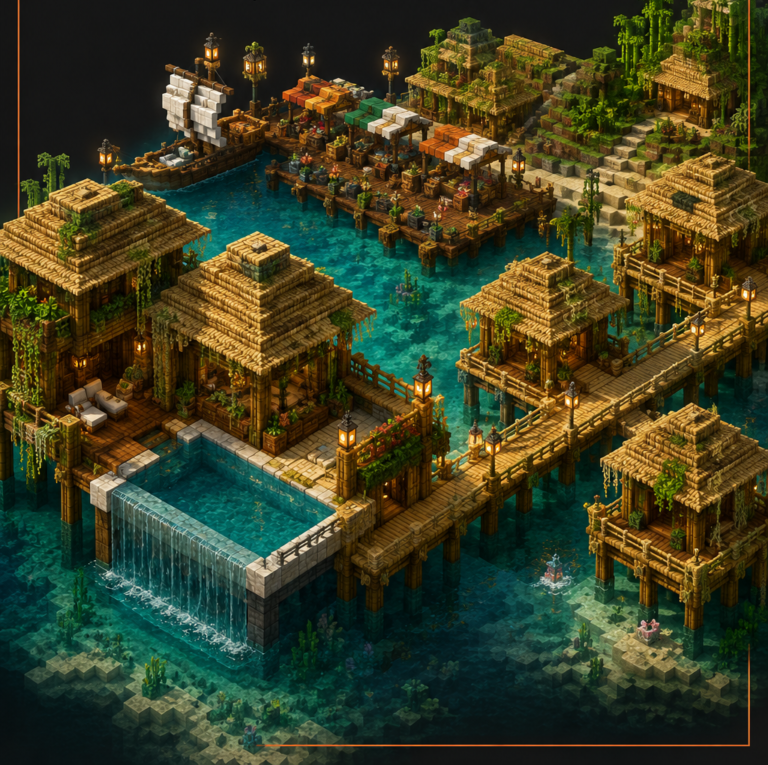
Stilted construction over water, timber-framed buildings in various states of age and decay, structures that feel grown rather than designed — this is the swamp’s architectural sweet spot. Swamp biome building explores both the practical and aesthetic dimensions of working with water as a defining site condition. The result, when handled well, is architecture that feels genuinely indigenous to its environment in a way that imported styles rarely achieve.
The dark atmosphere and distinctive green-tinted light also make the swamp one of the few biomes where aged and decaying aesthetics feel authentic rather than forced. Weathered wood, mossy stone, rusted iron accents — the palette writes itself.
Palette and Material Considerations
Mangrove swamps specifically offer a material palette that no other biome provides. The warm, reddish-orange of mangrove wood contrasts dramatically with the cool grey water and green vegetation, creating a naturally vibrant setting that suits tropical vernacular architecture and elevated stilt settlements above brackish water.
Using Biomes Strategically: Blending Boundaries
The most sophisticated builders do not limit themselves to a single biome’s materials and atmosphere; they work with biome transitions and deliberately blur boundaries to create richer environments. A plains build that incorporates a forest edge creates depth and mystery at its boundary. A desert fortress with an oasis courtyard tells a story about water as a resource and a luxury simultaneously.
Terraforming is the tool that makes these blends possible at scale, allowing you to reshape terrain, transplant vegetation, and modify the ground plane to serve your architectural intent. The key principle is that terraforming should always feel like it is revealing something that might plausibly have been there — not imposing something entirely alien on the landscape.
Landscape building in Minecraft approaches the environment from the opposite direction: instead of terraforming to suit architecture, it treats landscape creation as an architectural discipline in its own right, with the goal of producing natural-feeling environments that provide perfect context for whatever you build within them.
A Quick-Reference Framework
Rather than a rigid prescription, think of biome-style compatibility as a spectrum. Every pairing here represents a strong default, not an absolute rule — the most interesting builds often emerge from productive tension between style and setting.
Biome Building Palettes
Native materials for each biome — hover to expand. Use these as your primary colour reference before importing blocks from elsewhere.
The plains rewards formal, symmetrical, and urban architecture. The dark oak forest suits gothic, fantasy, and dark vernacular styles. The birch forest favours Scandinavian, contemporary, and light timber construction. The jungle demands monumental, Mesoamerican, or canopy-integrated approaches. The desert is home to ancient and brutalist aesthetics. The mountains support alpine, military, and cliff-integrated architecture. The swamp invites vernacular, folk, and atmospheric building.
The 3 best Minecraft biomes to spawn in takes a practical survival angle on biome selection that is worth reading alongside this more architectural perspective — sometimes your starting biome makes that choice for you, and knowing how to make the best of wherever you land is its own skill.
Conclusion: Let the Landscape Lead
The builders who get the most out of Minecraft’s environments are those who approach biome selection as a genuine creative decision rather than an afterthought. The landscape is not neutral. It brings palette, atmosphere, scale, and structural constraints that will shape your architecture whether you acknowledge them or not — so you may as well acknowledge them deliberately and use them with intention.
Think about your intended building style before you place your first block, then go and find the biome that will make that style feel inevitable. Your architecture will thank you.
Continue Your Journey
- Complete Guide to Minecraft Biomes: Resources, Building and Exploration — the essential companion to this article, covering everything your chosen biome has to offer beyond its architectural character
- Minecraft Architecture: From Blocks to Blueprints — the foundational guide to thinking architecturally in Minecraft, whatever biome you choose
- Terraforming Guide: Reshaping Biomes for Better Building — how to modify your chosen environment to serve your architectural intent
- Security and Defense by Biome: Protecting Bases from Environmental Threats — the functional dimension of biome-specific building
- Recreating Real Architecture in Minecraft: A Step-by-Step Guide — if this article has inspired you to bring a specific real-world style into Minecraft, this is your next stop
Which biome do you default to for your most ambitious builds — and does your favourite building style actually suit it? Let us know in the comments.
Want more architectural analysis and building guides delivered straight to your inbox? Subscribe to the Bricks & Blocks Creative newsletter for weekly insights for serious adult builders.