Why your starting location determines your first 20 hours of success or struggle
Standing at the edge of a vast, procedurally-generated world, facing that crucial moment when you spawn into a new Minecraft realm, few realize just how much their starting biome choice will influence the next several hours of gameplay. Whether you’re a returning player starting fresh or diving into Minecraft for the first time, understanding how your Minecraft starting biome impacts resource availability, survival difficulty, and building opportunities can mean the difference between thriving and merely surviving.
This isn’t about finding the “perfect” spawn location but about making informed decisions that align with your playstyle and goals. Some biomes offer abundant resources but challenging terrain, while others provide safety at the cost of variety. By the end of this guide, you’ll have a strategic framework for evaluating any spawn location and know exactly which biomes serve as the best spawn biome options for different types of players.
Let’s dive into the art and science of early game biome selection, ensuring your next world starts on solid ground, literally and figuratively.
Understanding Biome Impact on Early Game
The difference between spawning in Plains versus Desert isn’t just aesthetic—it fundamentally changes your early game strategy and available progression paths. Every biome presents a unique combination of resource availability, environmental challenges, and expansion opportunities that directly impact your first crucial hours.
Resource Availability: Your Foundation for Success
Your starting biome determines which materials you’ll have immediate access to, shaping everything from your first shelter to your food sources. Plains biomes offer oak wood, wheat seeds from grass, and passive mobs for food, creating a balanced resource foundation. Forest biomes provide abundant wood varieties but may lack open spaces for farming. Meanwhile, desert spawns can leave you scrambling for basic wood resources while offering unique building materials like sandstone.
The key insight many players miss is that resource scarcity in early game isn’t just about survival—it affects your building creativity and progression speed. Limited wood types constrain your aesthetic choices, while abundant stone access enables more ambitious construction projects.
🎯 Minecraft Starting Biome Resource Guide
Compare early-game resources to choose your perfect spawn location
- Oak Trees
- Wood Variety
- Water Access
- Passive Mobs
- Farming Potential
- Village Spawn Rate
- Building Space
- Natural Shelter
- Tree Density
- Wood Variety
- Water Access
- Passive Mobs
- Mushrooms
- Village Spawn Rate
- Building Space
- Natural Shelter
- Tree Access
- Wood Variety
- Water Access
- Fishing
- Clay Access
- Biome Diversity
- Transportation
- Building Space
Rating Legend
Immediate Threats: Survival Considerations
Not all biomes are created equal when it comes to hostile mob spawning and environmental hazards. Open biomes like Plains expose you to more hostile mobs but provide better visibility for threat assessment. Dense forests offer natural shelter but create blind spots where creepers can surprise you. Some biomes, like swamps, have unique dangers such as slimes and difficult terrain navigation.
Understanding these threat patterns helps you prepare appropriate defensive strategies from day one, rather than learning through costly mistakes.
Long-term Expansion: Planning for Growth
Your starting location becomes the hub of your expanding base network. Biomes with access to multiple neighboring environments provide more diverse resources and building opportunities as you grow. A Plains spawn adjacent to Forest, Desert, and Ocean biomes offers incredible variety within reasonable travel distance, while an isolated Mesa spawn might limit your options significantly.
Smart players consider not just their immediate biome, but what lies within a 1000-block radius—roughly a 10-minute walk in each direction.
The Big Three: Best Starting Biomes for New Players
After analyzing hundreds of spawn scenarios and player feedback, three biome types consistently emerge as the most reliable choices for successful early game experiences. These aren’t necessarily the most exciting or unique options, but they provide the resource stability and manageable challenges that let you focus on learning and building rather than constantly struggling for survival.
Plains – The Classic Choice
Plains biomes earn their reputation as the Minecraft starting biome gold standard for good reason. These expansive grasslands offer the most balanced introduction to Minecraft’s core systems while providing excellent visibility for threat assessment and base planning.
Why Plains Works So Well:
- Immediate Building Space: Open terrain provides room for construction without tedious terrain modification
- Village Access: Higher village spawning rates mean potential trading, food, and iron from blacksmith chests
- Reliable Food Sources: Abundant passive mobs (cows, pigs, sheep, horses) for sustainable nutrition
- Balanced Resources: Oak trees provide steady wood without overwhelming forest density
- Farming Ready: Grass drops wheat seeds naturally for your first agricultural setup
The Resource Balance:
- Stone appears at reasonable depths for essential tool crafting
- Flat terrain makes resource gathering more efficient
- You can cover more ground in less time during exploration
- Multiple passive mob types provide leather, wool, and meat variety
Potential Drawbacks:
- Can feel repetitive for players seeking aesthetic variety
- Open terrain offers little natural shelter from hostile mobs
- Requires earlier defensive construction compared to forest biomes
- Grass and flowers may slow building if you prefer clean surfaces
Best Suited For: Players who want the traditional Minecraft experience, those prioritizing building projects over exploration, and anyone planning to establish a large, permanent base early in their world.
Forest/Birch Forest – The Resource Haven
Forest biomes transform the early game from resource scarcity into abundance management. These wood-rich environments excel for players who love building, crafting, and creating elaborate structures from the start.
The Abundance Advantage:
- Multiple Wood Types: Oak and birch trees create diverse building material options
- Natural Protection: Dense canopy offers shelter from hostile mobs during daylight
- Food Alternatives: Mushrooms in shaded areas provide early nutrition sources
- Building Sites: Varied terrain creates natural construction opportunities
- Material Security: Never worry about running out of wood for tools or construction
Resource Management Opportunities:
- Experiment with different building techniques without resource scarcity concerns
- Build larger starter bases than other biomes allow
- Create more tools and afford to waste materials on learning experiences
- Access to both oak and birch aesthetics from the same location
Navigation and Building Considerations:
- Dense forests can feel claustrophobic for newer players
- Tree density requires significant clearing for large projects
- Navigation becomes challenging without proper landmark identification
- Varied terrain complicates foundation laying for ambitious structures
Perfect For: Building enthusiasts who want immediate access to diverse materials, players who enjoy forest aesthetics, and those planning to create elaborate wooden structures or treehouses.
River/Beach Adjacent Locations
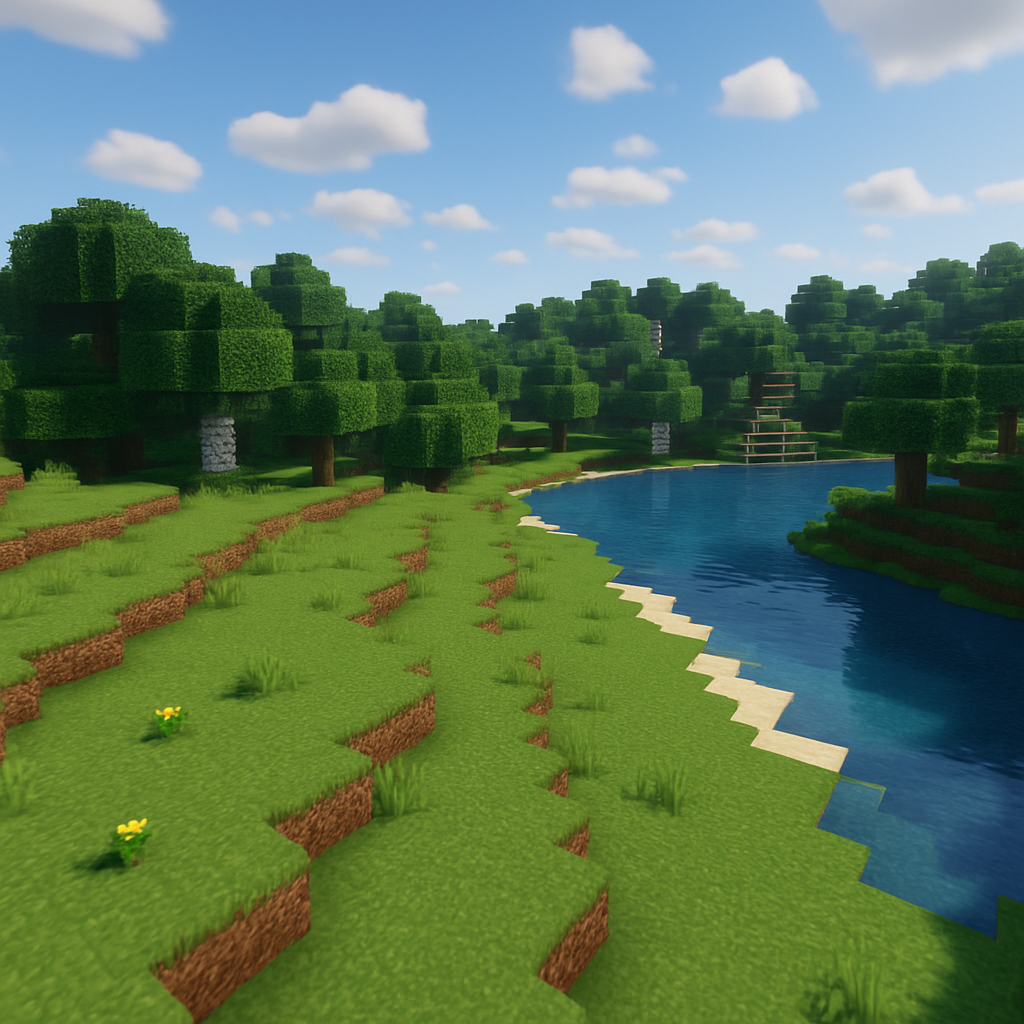
Spawning near water sources—whether rivers, beaches, or lake shores—provides unique strategic advantages that many players overlook. These locations offer resource diversity and expansion flexibility that become increasingly valuable as your world develops.
Water Access Benefits:
- Reliable Food Source: Fishing provides one of the most consistent early game nutrition options
- Building Materials: Clay deposits along waterways for decorative blocks and pottery
- Transportation Hub: Boat travel enables efficient exploration and distant resource gathering
- Renewable Resources: Water access ensures sustainable farming without well-digging
Biome Border Advantages:
- Resource Diversity: Access multiple biome resources within walking distance
- Material Variety: Beach spawns often connect Plains, Forest, and Ocean environments
- Reduced Travel: Eliminate extensive journeys for different resource types
- Strategic Positioning: Central location for accessing diverse gameplay opportunities
The Exploration Factor:
- Fastest Transportation: Boats provide superior early game travel speed
- Guided Adventure: Rivers lead to diverse destinations rather than random wandering
- Structure Discovery: Water features often connect to villages, temples, and monuments
- Trade Route Establishment: Water highways for connecting multiple base locations
Challenges to Consider: Waterside locations often have irregular terrain that complicates base construction. You may need to do more terraforming to create suitable building sites. Some water features attract unique hostile mobs or create spawning grounds for less desirable creatures.
Ideal For: Players who prioritize exploration and adventure, those interested in diverse building materials, and anyone planning to establish multiple bases connected by water travel.
Biomes to Approach with Caution
While no biome is completely unsuitable for experienced players, several present challenges that can frustrate newer players or those seeking a relaxed gameplay experience. These biomes aren’t necessarily bad choices, but they require specific strategies and expectations to navigate successfully.
Challenging but Rewarding Options
Taiga: The Cold Beauty Taiga biomes offer stunning spruce wood aesthetics and unique building opportunities with their tall, narrow trees and snowy landscapes. However, the cold environment limits food production, crops grow more slowly, and fewer passive mobs spawn naturally. The dense spruce forests can feel overwhelming and limit visibility. Villages are less common, reducing your chances of early trading opportunities.
Taiga works well for players who appreciate the aesthetic and don’t mind working harder for food security. The spruce wood provides excellent building materials for Nordic or mountain-style architecture.
Savanna: The Dramatic Landscape Savanna biomes create some of Minecraft’s most visually striking terrain with their acacia trees, dramatic cliff faces, and unique color palette. Villages do spawn in savanna areas, and the open terrain provides good visibility. However, the irregular terrain makes base construction challenging, and acacia wood’s orange tint limits its versatility in building projects.
The scattered tree distribution can make wood gathering less efficient than in denser forest biomes. Water sources may be scarce, complicating early game farming setup.
Swamp: The Resource Specialist Swamps offer unique resources like lily pads, vines, and witch huts that provide valuable materials for specific projects. The murky water and dense vegetation create an atmospheric environment that some players love.
Unfortunately, swamps present significant mobility challenges with their mixed land-water terrain. Slimes spawn more frequently, creating additional hostile mob pressure. The dark environment under the canopy increases general mob spawning, making exploration more dangerous.
Biomes to Avoid as Starting Locations
Desert: The Resource Desert While deserts offer unlimited sand and striking visual appeal, they present serious resource challenges for new spawns. Wood is scarce, forcing long travel distances for basic crafting materials. Water sources are rare, making farming setup complex and food production unreliable.
Villages do spawn in deserts and can provide crucial early resources, but counting on finding one creates unnecessary risk in your early game strategy.
Mountain/Extreme Hills: The Vertical Challenge Mountainous terrain creates beautiful, dramatic landscapes but presents significant mobility and building challenges. The steep terrain makes movement slow and dangerous, while the irregular surfaces complicate base construction. Resource gathering becomes inefficient when you’re constantly navigating elevation changes.
While mountains do provide access to unique resources like emeralds and coal, these aren’t essential for early game progression.
Ocean: The Obvious Problem Ocean spawns leave you treading water with no immediate access to basic resources. While technically survivable with advanced knowledge of shipwrecks and ocean monuments, ocean starts create unnecessary difficulty for any player seeking a standard Minecraft experience.
Mushroom Island: The Isolated Paradise Mushroom biomes are fascinating and completely safe from hostile mob spawning, making them seem ideal. However, their isolation means no villages, limited building materials, and no passive mobs for food and materials. The unique resources don’t compensate for the lack of basic necessities.
The Strategic Decision Framework
Choosing your ideal starting location requires more than just identifying which biomes offer the best resources but you need to align your spawn choice with your personal playstyle and immediate goals. This decision framework helps you evaluate any potential spawn location systematically.
Assess Your Playstyle
The Builder’s Priorities If you’re primarily interested in construction projects, prioritize biomes that offer diverse building materials and flat terrain for foundation laying. Plains and Forest biomes typically serve builders best, providing both space and materials. Consider proximity to multiple biome types for varied block palettes—nothing limits creative building like being stuck with a single wood type.
The Explorer’s Needs Adventure-focused players benefit from spawns that provide good transportation options and access to multiple biome types. River and beach locations excel here, offering boat travel and connections to diverse areas. Look for spawns where you can see multiple different biome types from your starting position.
The Survivor’s Approach Players who enjoy the challenge and resource management aspects of survival should consider how quickly they can establish food security and basic defenses. Plains offer the most predictable progression path, while more challenging biomes provide increased satisfaction when overcome successfully.
Evaluate Your Surroundings
The 500-Block Scan Before committing to any spawn location, take time to explore roughly 500 blocks in each direction. This reveals the broader context of your starting area and identifies crucial nearby resources. Look for water sources for farming, stone deposits for tools, and varied terrain that won’t become monotonous over time.
Village Proximity Assessment Villages provide massive early game advantages through trading, food, and occasionally valuable loot in blacksmith chests. A village within 1000 blocks of your spawn provides significant benefits without requiring extensive travel. Use your comprehensive biome guide to understand which biomes have higher village generation rates.
Multi-Biome Access The best spawn locations provide access to multiple biome types within reasonable travel distance. This ensures you’re not locked into the resource limitations of a single environment as your needs evolve. A spawn that connects Plains, Forest, and Desert biomes within a day’s travel offers incredible long-term versatility.
Advanced Starting Strategies
Once you understand basic biome selection, these advanced techniques can help you optimize your spawn choice for specific goals or overcome the limitations of less-than-perfect starting locations.
The Border Strategy: Maximum Versatility
Instead of spawning deep within a single biome, look for locations where multiple biomes meet. These border areas provide immediate access to diverse resources and building materials without requiring extensive travel. A spawn point where Plains meets Forest and Ocean offers wood variety, open building space, fishing opportunities, and potential boat travel—essentially combining the benefits of multiple biome types.
Border locations also provide natural geographical landmarks for navigation and base expansion planning. The visual variety keeps the area interesting as you spend hundreds of hours developing your world.
The Village Rush: Leveraging Generated Structures
If you spot a village during your initial spawn area exploration, consider establishing your primary base within or adjacent to it. Villages provide immediate access to beds for spawn point setting, food through crop farms, and valuable trading opportunities that can accelerate your progression significantly.
The village infrastructure—wells, farms, and buildings—provides a foundation you can expand upon rather than starting from nothing. Trading with villagers can provide access to resources that might be scarce in your local biome, effectively offsetting some resource limitations.
Remember that villages need protection from hostile mobs, so plan defensive structures early if you choose this strategy. Check out our beginner’s survival guide for essential village defense techniques.
Quick Reference: Spawn Location Checklist
Before settling on any spawn location, run through this quick evaluation checklist:
Resource Basics:
- Wood source within 200 blocks
- Stone accessible at reasonable depth
- Water source for farming within 300 blocks
- Food sources (animals or natural crops) available
Safety Considerations:
- Reasonable visibility for threat assessment
- Natural shelter options or easy building terrain
- No immediate environmental hazards (lava, deep water, cliffs)
Growth Potential:
- Expansion space for base development
- Access to multiple biome types within 1000 blocks
- Interesting terrain features for future projects
- Village or other generated structures within exploration range
Personal Preferences:
- Aesthetic appeal matches your building style
- Terrain complexity suits your patience level
- Challenge level appropriate for your skill and goals
For players new to Minecraft entirely, our complete beginner’s guide provides essential context for understanding these factors and their importance in successful gameplay.
Conclusion: Making Your Choice
The perfect spawn doesn’t exist, but the right spawn for your specific needs and goals absolutely does. Plains and Forest biomes remain the most reliable choices for new players, offering resource stability and manageable challenges that let you focus on learning Minecraft’s systems rather than constantly struggling for survival. Water-adjacent locations provide unique opportunities for players interested in exploration and resource diversity.
Remember that even a less-than-ideal spawn can lead to memorable experiences and unique challenges that teach you valuable skills. The most important factor isn’t finding the “best” biome—it’s understanding what each location offers and making informed decisions that align with your goals.
Your spawn biome choice shapes your first 20 hours more than any other single decision, but it doesn’t determine your entire Minecraft experience. Once you’ve established your foothold and learned the game’s rhythms, the entire world opens up for exploration and resource gathering.
Ready to start your next adventure? Consider exploring our guide to essential building fundamentals to make the most of whatever spawn location you choose, or dive into our architectural tutorial for inspiration on turning any terrain into something spectacular.
What’s your favorite starting biome, and what drew you to choose it? Share your spawn location stories and strategies in the comments below—every experienced player has at least one tale of a memorable first day!
Looking for more Minecraft guides? Check out our complete game modes overview or learn about essential building tools that can enhance your building experience in any biome.