When you’re planning your next major Minecraft build or establishing a new survival base, choosing the right biome can make the difference between a resource-rich paradise and a constant struggle for materials. Not all biomes are created equal, and understanding which ones offer the most value for your specific needs transforms how you approach world exploration and settlement planning.
The concept of “resource richness” extends beyond simple ore generation. While diamonds spawn equally across all biomes, factors like structure density, unique block availability, terrain accessibility, and renewable resource potential create dramatic differences in practical value. A biome that’s perfect for a redstone engineer might frustrate a builder focused on aesthetic variety, while survival players prioritize completely different considerations.
This comprehensive comparison ranks Minecraft’s biomes by their resource profiles, helping you identify which environments deserve your attention based on your building goals and gameplay style.
Understanding Biome Resource Profiles
Resource value in Minecraft operates on multiple dimensions. Raw ore generation represents just one factor, while unique blocks, structure spawning, mob varieties, and terrain characteristics all contribute to a biome’s overall utility.
Different biomes excel in different categories. Some offer unmatched ore density while others provide exclusive decorative blocks or farming opportunities. The key is matching biome strengths to your project requirements rather than seeking a mythical “perfect” biome.
🏔️ Minecraft Biome Resource Comparison
Compare resource richness across biomes to plan your perfect base location
| Biome | Tier | Ore Density | Unique Resources | Structures | Safety | Key Resources |
|---|---|---|---|---|---|---|
| Badlands Overworld | Elite | Massive gold boost, terracotta, red sand, surface mineshafts | ||||
| Mountains Overworld | Elite | Emeralds (exclusive), exposed coal/iron, goat horns, powder snow | ||||
| Jungle Overworld | Elite | Bamboo, cocoa (exclusive), jungle wood, melons, parrots, pandas | ||||
| Mushroom Fields Overworld | Elite | Zero mob spawning, mycelium (exclusive), mooshrooms, mushrooms | ||||
| Mangrove Swamp Overworld | High Value | Mangrove wood, mud blocks, clay, propagules, witch huts | ||||
| Cherry Grove Overworld | High Value | Cherry wood, pink petals (exclusive), bees | ||||
| Warm Ocean Overworld | High Value | Coral (5 types, exclusive), sea pickles, tropical fish, shipwrecks | ||||
| Warped Forest Nether | High Value | Low mob spawning, endermen, warped wood, shroomlights | ||||
| Lush Caves Cave | High Value | Azalea, moss, glow berries, clay, axolotls, dripleaf | ||||
| Regular Swamp Overworld | Moderate | Slime spawning, clay, vines, lily pads, witch huts | ||||
| Flower Forest Overworld | Moderate | All flower types, bees, honey, complete dye palette | ||||
| Crimson Forest Nether | Moderate | Crimson wood, hoglins, renewable meat/leather, crimson fungus | ||||
| Nether Wastes Nether | Moderate | Nether quartz, gold ore, fortresses, bastions, standard Nether | ||||
| Desert Overworld | Moderate | Desert temples, villages, sand, sandstone, cacti, husks | ||||
| Plains Overworld | Standard | Villages, horses, flat terrain for building, good visibility | ||||
| Forest Overworld | Standard | Oak/birch wood, moderate resources, balanced biome | ||||
| Taiga Overworld | Standard | Spruce wood, wolves, foxes, sweet berries, villages |
Resource categories worth evaluating include ore accessibility, which measures how easily you can obtain common ores like coal and iron from surface or near-surface deposits. Unique materials encompass blocks and items available exclusively or primarily in specific biomes. Structure density determines how frequently valuable generated structures appear within the biome boundaries. Renewable resources include farmable materials like wood types, crops, and mob drops. Finally, safety factors account for hostile mob spawning rates and environmental hazards affecting your ability to actually harvest resources.
Understanding these categories helps you evaluate biomes strategically rather than relying on outdated conventional wisdom about which environments are “best.” If you’re new to biome mechanics, check out our complete guide to Minecraft biomes for foundational knowledge.
Elite Resource Biomes: The Top Tier
Badlands (All Variants)
The Badlands stands alone as Minecraft’s most ore-dense biome, fundamentally changing resource collection strategies for players fortunate enough to spawn near one. This biome’s unique ore generation makes it invaluable for mid-to-late game progression.
Gold spawns at dramatically increased rates throughout Badlands biomes, with additional gold veins generating from Y-level 32 upward to high elevations. This supplementary generation stacks with standard Overworld gold spawning, creating gold density unmatched anywhere else in the game. For players building advanced redstone contraptions or decorative builds using gold blocks, settling near Badlands terrain cuts resource gathering time dramatically.
Surface-level abandoned mineshafts riddle Badlands biomes, spawning at much higher rates than underground equivalents elsewhere. These structures provide easy access to rails, detector rails, powered rails, minecarts, torches, wood planks, and cave spider spawners for XP farms. The surface accessibility means you can farm these resources without extensive cave diving.
Terracotta and red sand appear in massive quantities across all Badlands variants, offering builders an extensive natural palette for southwestern and desert-themed constructions. The various terracotta colors create natural geological formations that inspire organic building designs.
Resource Highlights:
- Exceptional gold ore density (best in Overworld)
- Surface mineshafts with rails and spawners
- Abundant terracotta in multiple colors
- Red sand for concrete production
Best For: Gold farming, rail collection, terracotta harvesting, establishing resource-gathering outposts
Drawbacks: Limited wood availability, harsh terrain for agriculture, aesthetic may not suit all building styles
Mountain Biomes (Jagged Peaks, Frozen Peaks, Stony Peaks)
Mountain biomes represent the only source of emerald ore in Minecraft, making them essential for players who trade extensively with villagers or want emerald blocks for building. The emerald generation concentrates between Y-levels 85-236, with density increasing at higher elevations.
Exposed cliff faces throughout mountain biomes reveal substantial coal and iron deposits without requiring any mining. You can literally gather dozens of coal blocks just by exploring mountainsides, making these biomes exceptional for early-game resource collection. The vertical terrain concentrates ore visibility far better than flat biomes where ores hide underground.
Goats spawn exclusively in mountain regions, providing goat horns that create unique sound effects for custom builds and adventure maps. Powder snow appears naturally in frozen mountain variants, offering defensive building applications and parkour challenge potential.
The dramatic elevation changes provide spectacular building locations with natural defensive advantages. Mountain-based structures gain inherent visual impact from their elevated positioning, as explored in our mountain biome construction guide.
Resource Highlights:
- Exclusive emerald ore generation
- Exposed coal and iron on cliff faces
- Goat horns (mountain-exclusive)
- Powder snow in frozen variants
- Spectacular building locations
Best For: Emerald collection, early coal/iron gathering, goat horn farming, dramatic architectural projects
Drawbacks: Challenging terrain navigation, limited flat building space, difficult farm establishment
Jungle and Bamboo Jungle
Jungle biomes pack incredible biodiversity into dense, challenging terrain. The concentration of unique resources makes jungles essential destinations despite their navigation difficulties.
Jungle wood provides a distinctive tropical aesthetic unavailable elsewhere. Bamboo grows naturally in massive quantities throughout both jungle variants, offering one of the game’s fastest renewable building materials. Cocoa pods attach exclusively to jungle wood, making this the only biome where you can establish cocoa farms. Melons spawn naturally, providing food and trading resources.
The fauna diversity exceeds all other biomes. Ocelots, pandas, and parrots spawn exclusively in jungle environments, with parrots offering five color variants for decorative purposes. Jungle temples generate frequently, providing redstone components, iron, diamonds, and bone blocks.
Many jungle biomes connect to lush caves underneath, creating two-for-one resource opportunities. This combination gives access to azalea trees, moss, glow berries, dripleaf, clay, and axolotls without traveling between distant biomes.
Resource Highlights:
- Jungle wood and bamboo (fastest renewable material)
- Cocoa pods (exclusive)
- Melons for food/trading
- Three exclusive mob types (ocelots, pandas, parrots)
- Jungle temples with valuable loot
- Frequent lush cave connections
Best For: Bamboo farming, tropical builds, cocoa production, biodiversity projects, establishing varied resource bases
Drawbacks: Dense foliage hinders navigation, challenging terrain for construction, higher hostile mob density
Mushroom Fields
Mushroom Fields biomes offer something no other environment can match: complete hostile mob immunity. Mobs cannot naturally spawn on mycelium blocks, making this the safest biome in Minecraft for establishing elaborate bases and automated farms.
Mooshrooms provide infinite mushroom stew when sheared or bowled, creating a renewable food source without farming infrastructure. The mooshroom mechanic also enables efficient mushroom farming for decorative purposes and fermented spider eye production.
Mycelium blocks themselves cannot be obtained except through Silk Touch harvesting in Mushroom Fields, giving this biome unique decorative value. The purple-tinged grass creates distinctive terrain for builds focused on otherworldly or fantasy aesthetics.
The safety factor transforms late-game projects. Automated farms, large-scale redstone contraptions, and extensive building projects proceed without constant hostile mob interruption. For players working on massive survival builds, this advantage saves countless hours dealing with creeper explosions and skeleton attacks.
Resource Highlights:
- Zero hostile mob spawning (supreme safety)
- Mooshrooms for infinite mushroom stew
- Mycelium blocks (exclusive)
- Red and brown mushroom abundance
- Massive mushrooms for wood/blocks
Best For: Safe base establishment, automated farms, large-scale survival projects, peaceful building environments
Drawbacks: Extreme rarity, limited resource variety, distance from other biomes, aesthetic limitations
High-Value Specialized Biomes
Swamps and Mangrove Swamps
Swamp biomes deliver specific resources critical for certain playstyles, particularly for players focused on slime farming and building with unique block palettes.
Regular swamps function as one of only two locations where slimes spawn naturally (the other being specific underground chunks). Slime spawning occurs at night in swamp biomes, making slime ball collection far more straightforward than tracking down slime chunks. Witches’ huts generate in swamps, providing witch farms for redstone dust, glowstone, sugar, and gunpowder.
Clay generates abundantly in swamp waters, offering builders easy access to bricks and terracotta. Vines grow naturally, providing decoration and climbing mechanics. Lily pads spawn extensively, useful for water surface decoration and safe water crossing.
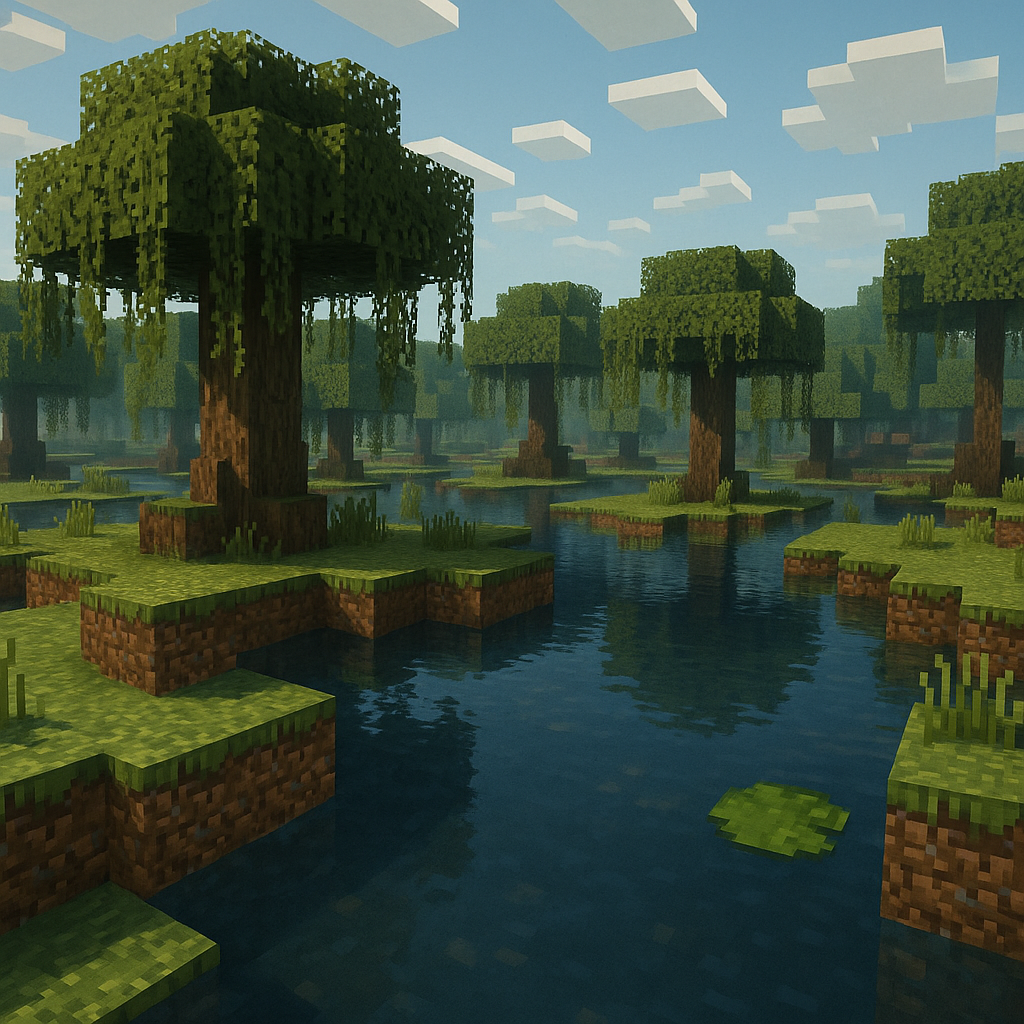
Mangrove swamps add entirely new resources to the swamp category. Mangrove wood introduces a distinctive reddish-brown timber option. Mud blocks enable conversion into packed mud and decorative mud bricks, expanding building palettes significantly. Mangrove propagules function as unique saplings that can grow in water, creating novel farming and landscaping opportunities.
Resource Highlights:
- Slime spawning (regular swamps)
- Witch huts for farms
- Abundant clay deposits
- Vines and lily pads
- Mangrove wood (mangrove variant)
- Mud and mud bricks (mangrove variant)
Best For: Slime farming, witch farms, clay collection, unique wood palette, mud-based builds
Drawbacks: Murky water reduces visibility, challenging terrain navigation, limited aesthetic appeal for some builders
Cherry Grove and Flower Forest
These biomes prioritize aesthetic resources over raw material quantity, making them invaluable for builders focused on decorative elements and dye production.
Cherry Groves add cherry wood and pink petals, both completely unique to this biome. The pink aesthetic creates romantic, spring-themed builds impossible to replicate with other resources. Cherry blossom trees provide a distinctive Asian-inspired architectural element that has become increasingly popular in custom builds.
Flower Forests generate with nearly every flower type concentrated in one location. This makes them the optimal biome for establishing comprehensive dye farms and bee operations. The flower density enables efficient collection of all dye colors without traveling across multiple biomes. Bees spawn naturally in higher numbers, providing easy access to honey and honeycomb for both food and building materials.
Both biomes offer limited practical resources beyond their unique blocks, but their specialized nature makes them essential destinations for decoration-focused players. Interior design projects, particularly those covered in our Minecraft interior design guide, benefit enormously from the color and block variety these biomes provide.
Resource Highlights:
- Cherry wood and pink petals (Cherry Grove exclusive)
- Comprehensive flower variety (Flower Forest)
- High bee spawn rates (both)
- Honey and honeycomb production
- Complete dye palette access
Best For: Decorative builds, dye production, bee farming, aesthetic-focused projects, Japanese/Asian-inspired architecture
Drawbacks: Limited practical resources, may not suit all build styles, small biome size can make location challenging
Warm Ocean
Warm Ocean biomes contain the most diverse aquatic resources in Minecraft, making them essential for players building underwater bases, aquariums, or coral-themed structures.
Coral reefs spawn exclusively in Warm Oceans, providing five coral types in both living and dead variants. The vibrant colors create spectacular underwater landscapes and decoration options. Sea pickles generate naturally, offering underwater lighting solutions. Tropical fish spawn in numerous color combinations, providing aquarium variety unmatched in other biomes.
Ocean monuments can generate in Warm Ocean biomes, though they spawn across all ocean types. The combination of monuments with coral reefs creates rich exploration opportunities. Shipwrecks and ocean ruins provide early-game diamonds, iron, emeralds, and the Heart of the Sea for crafting conduits.
The aesthetic potential of Warm Ocean resources has made coral one of the most sought-after decorative materials. The translucent nature and color variety enable organic, sculptural builds impossible with terrestrial blocks.
Resource Highlights:
- Five coral types (exclusive)
- Sea pickles for underwater lighting
- Tropical fish variety
- Shipwrecks and ocean ruins
- Heart of the Sea for conduits
- Prismarine from ocean monuments
Best For: Underwater construction, aquarium projects, coral decoration, ocean monument raids, nautical builds
Drawbacks: Underwater navigation challenges, drowned hostiles, limited terrestrial building space, conduit requirement for extended work
Nether Biome Resource Comparison
Nether Wastes
The Nether Wastes represents the Nether’s baseline biome, but “baseline” doesn’t mean unrewarding. This most common Nether environment balances accessibility with solid resource generation.
Nether quartz generates abundantly throughout Nether Wastes, providing experience points and crafting materials for redstone comparators and daylight sensors. Nether gold ore spawns frequently, offering an alternative gold source that’s particularly valuable in the early-to-mid game before you’ve located Badlands terrain.
Nether fortresses and bastion remnants can generate in Nether Wastes, providing access to nether wart, blaze rods, wither skeleton skulls, and ancient debris. The structure density makes Nether Wastes a reliable biome for establishing early Nether bases while searching for more specialized biomes.
The relatively open terrain and standard hostile mob density make Nether Wastes navigable without the extreme hazards of lava-heavy biomes. For players learning Nether mechanics, starting in Nether Wastes provides a balanced introduction.
Resource Highlights:
- Abundant nether quartz for XP
- Frequent nether gold ore
- Nether fortresses and bastions
- Standard ghast/zombie piglin spawning
- Open terrain for navigation
Best For: Quartz farming, early Nether exploration, fortress hunting, establishing starter Nether bases
Drawbacks: No unique resources, standard Nether dangers, aesthetically similar to overworld wastelands
Crimson Forest
Crimson Forests provide renewable wood in the Nether plus a sustainable food source, making them critical for long-term Nether operations.
Crimson stems function as the Nether’s equivalent to overworld trees, providing renewable wood for tools, crafting, and building without returning to the Overworld. The distinctive crimson aesthetic creates alien architectural possibilities. Crimson fungus grows on crimson nylium, enabling tree farming.
Hoglins spawn naturally in Crimson Forests, offering the Nether’s only renewable meat source. Establishing hoglin farms in or near Crimson Forests enables sustainable food production for extended Nether projects. The hoglin spawning also provides leather for books and item frames.
Like all Nether biomes, Crimson Forests contain nether gold ore and quartz. The combination of wood, food, and standard Nether resources makes Crimson Forests excellent locations for permanent Nether bases, particularly for players working on projects like our Nether building guide explores.
Resource Highlights:
- Renewable crimson wood
- Hoglin spawning for food/leather
- Crimson fungus and nylium
- Weeping vines for decoration
- Standard Nether ores and structures
Best For: Sustainable Nether bases, long-term Nether projects, hoglin farming, crimson wood collection
Drawbacks: Hostile hoglin attacks before farming, dense fungal obstacles, limited visibility
Warped Forest
Warped Forests stand out as the Nether’s safest biome, with hostile mob density dramatically lower than other Nether environments. The distinctive cyan aesthetic and unique resources make this biome valuable beyond its safety factor.
Endermen spawn in high concentrations throughout Warped Forests while other hostile mobs remain rare. This creates efficient ender pearl farming opportunities without constructing elaborate farms. For players preparing for End exploration or building with ender chests, Warped Forests accelerate pearl collection dramatically.
Warped stems provide renewable cyan-tinted wood with a unique appearance. Warped fungus grows on warped nylium, enabling sustainable tree farming. Shroomlights generate naturally, providing ambient lighting blocks with distinctive appearance. Warped wart blocks offer solid decorative options.
The low hostile mob density transforms Nether base building. Constructing elaborate bases or automated farms in Warped Forests proceeds with minimal mob interference, similar to Mushroom Fields’ advantages in the Overworld.
Resource Highlights:
- Extremely low hostile mob spawning
- High enderman density for pearl farming
- Renewable warped wood
- Shroomlights for lighting
- Warped wart blocks for decoration
- Twisting vines for vertical movement
Best For: Safe Nether bases, ender pearl farming, late-game Nether projects, warped aesthetic builds
Drawbacks: Limited hostile mob drops, distance from fortresses, may require travel for specific resources
Cave Biome Considerations
Lush Caves
Lush Caves technically qualify as underground biomes, but their resource density and unique blocks warrant inclusion in any resource comparison. The aesthetic variety concentrated in Lush Caves rivals any surface biome.
Azalea trees mark Lush Cave locations from the surface, with both regular and flowering variants providing unique decorative wood. Moss blocks carpet extensive areas, spreading naturally and enabling moss farming. Moss converts stone-based blocks into mossy variants when bone meal is applied, multiplying building palette options.
Glow berries generate naturally, providing both food and lighting simultaneously. Cave vines create atmospheric decoration. Dripleaf plants function in parkour and aesthetic applications, with small and big dripleaf offering different mechanics. Clay concentrates in Lush Cave floors, making brick production efficient.
Axolotls spawn exclusively in Lush Caves (and only in complete darkness), providing both companionship and practical underwater combat assistance. The various colors create collection opportunities for players interested in breeding projects.
The resource variety means Lush Caves often serve as one-stop resource locations. A single Lush Cave can provide blocks, food, lighting, decorative plants, clay, and standard underground ores all within connected cave systems.
Resource Highlights:
- Azalea trees (flowering and regular)
- Moss blocks for spreading
- Glow berries for food/lighting
- Dripleaf plants (small and big)
- Abundant clay deposits
- Axolotls (five color variants)
- Spore blossoms for atmosphere
Best For: Integrated underground bases, moss farming, clay collection, unique flora variety, axolotl breeding
Drawbacks: Underground navigation, limited surface access, darkness hazards, locating can be challenging
Strategic Biome Selection for Different Goals
For Ore-Focused Players
Prioritize Badlands for gold, Mountains for emeralds and exposed iron/coal, and any biome with good cave access for diamonds. Remember that diamond generation remains consistent across all biomes, but terrain accessibility affects mining efficiency. Mountainous regions often provide better access to cave systems through exposed cliff faces.
Desert biomes deserve mention for structure density rather than ore generation. Desert temples and villages spawn frequently, providing early-game diamonds, iron, and trading opportunities that can accelerate progression before you’ve established dedicated mining operations.
For Decorative Block Collectors
Focus on biomes with unique block palettes. Warm Oceans provide coral, Cherry Groves offer pink petals and cherry wood, Flower Forests give comprehensive dye access, and Lush Caves deliver moss and azalea varieties. Mangrove Swamps add mud-based blocks, while Crimson and Warped Forests contribute Nether-specific decorative options.
Building projects requiring extensive block variety benefit from establishing satellite bases in multiple biomes rather than trying to transport everything to a single location. Our guide to massive structures covers logistics for multi-biome building projects.
For Safe Base Locations
Mushroom Fields provide absolute safety from hostile mob spawning, making them the ultimate choice when available. Warped Forests offer Nether-equivalent safety with dramatically reduced hostile mob density. Flat biomes like Plains and Savanna provide good visibility and easy mob management even without exclusive safety features.
Mountain bases gain natural defensive advantages from elevation and restricted mob approach paths. Building into mountainsides or establishing cliff-face bases limits hostile mob angles while maintaining resource accessibility.
For Farming Operations
Plains, Sunflower Plains, and Flower Forest biomes offer flat terrain ideal for crop farms. Cherry Groves provide bee farming advantages. Swamps enable slime farming. Crimson Forests support hoglin operations. Jungle biomes allow cocoa, bamboo, and melon farming.
Late-game farms benefit from Mushroom Fields’ safety or Warped Forests’ low mob density. Automated farms in these biomes require less defensive infrastructure, reducing redstone complexity and material investment. If you’re working with complex automation, our redstone engineering guide covers advanced farm designs.
For Structure Hunters
Deserts, Jungles, and Oceans lead structure generation rates. Deserts spawn temples and villages frequently. Jungles generate temples reliably. Ocean biomes contain numerous shipwrecks and ruins. Badlands feature surface mineshafts. Swamps generate witch huts. Each structure type provides specific loot tables worth targeting based on your progression needs.
Combining Biomes for Maximum Efficiency
The most resource-efficient worlds combine multiple valuable biomes within reasonable travel distance. Ideally, you want complementary biomes that cover different resource categories without requiring extensive travel.
A desert-mountain border region provides structure density from the desert combined with emerald and exposed ore access from mountains. Jungle-swamp combinations offer biodiversity plus clay and slime spawning. Badlands near plains enable gold farming while maintaining easy agriculture nearby.
Nether portal networks let you link distant Overworld biomes through the Nether, with travel distances reduced by the 8:1 coordinate ratio. Strategic portal placement can connect your main base to distant but valuable biomes like Mushroom Fields or Badlands without requiring dangerous overworld travel. For players new to basic survival strategies, our survival mode guide covers portal network fundamentals.
Practical Resource Value Rankings
Tier 1 – Essential Destinations:
- Badlands (gold, mineshafts, terracotta)
- Mountains (emeralds, exposed ores)
- Jungle/Bamboo Jungle (unique blocks, structures, biodiversity)
- Mushroom Fields (safety)
Tier 2 – High Value Specialists:
- Mangrove Swamp (mud blocks, unique wood)
- Cherry Grove (exclusive aesthetics)
- Warm Ocean (coral, aquatic resources)
- Warped Forest (Nether safety, ender pearls)
- Lush Caves (block variety, clay)
Tier 3 – Situationally Valuable:
- Regular Swamp (slime farming)
- Flower Forest (dyes, bees)
- Crimson Forest (Nether wood, hoglins)
- Nether Wastes (baseline Nether resources)
- Desert (structures, early progression)
Tier 4 – Standard Value:
- Plains, Forest, Taiga, Savanna variants
- Basic ocean types
- Most other biomes
These rankings reflect general resource value, but your specific project requirements might elevate lower-tier biomes. A player building exclusively with spruce would rank Taiga much higher, while someone focused on aquatic projects might prioritize all ocean variants.
Making Your Biome Selection
When evaluating minecraft biome resources for your next project, consider your build’s specific requirements rather than defaulting to supposedly “best” biomes. A most valuable biomes list provides starting points, but practical value depends on matching biome resources to your actual needs.
Resource comparison between biomes reveals that no single environment provides everything. Success comes from identifying which resources matter most for your current project, then strategically establishing bases or outposts in appropriate biomes.
Start by inventorying your build’s material requirements. Cross-reference those materials against biome-specific resources. Prioritize biomes that provide multiple required resources or particularly rare materials. Establish primary bases in central locations with secondary outposts in specialized biomes as needed.
The landscape building principles in our landscape guide apply equally whether you’re working in resource-rich Badlands or aesthetic-focused Cherry Groves. Understanding your resources enhances rather than limits creative possibilities.
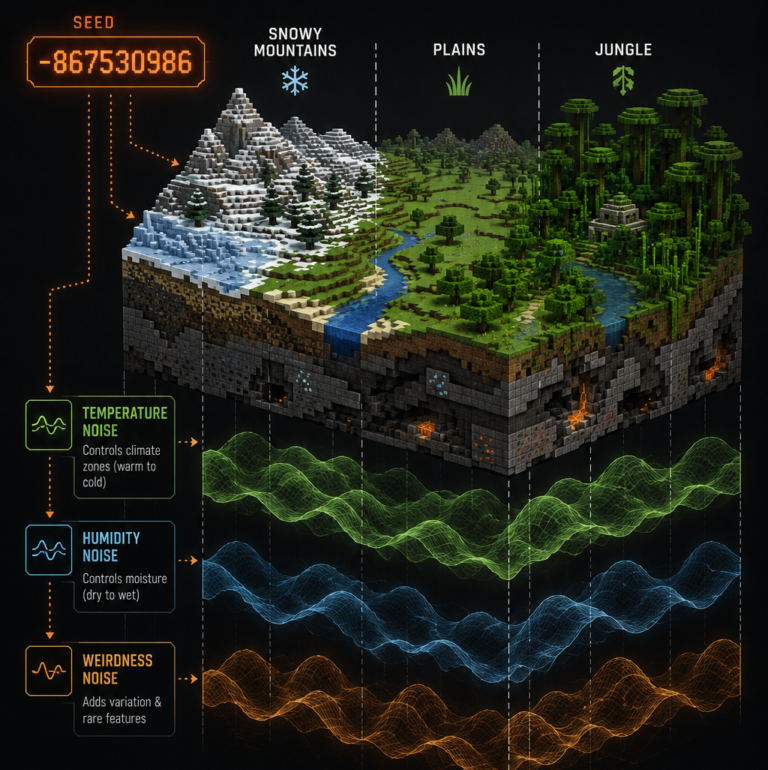
Remember that seed selection during world creation affects biome distribution. The best Minecraft seeds for spawning often provide convenient access to multiple valuable biomes, reducing travel time and increasing practical resource availability. If you’re starting fresh, investing time in seed selection pays dividends throughout your world’s lifespan.
Conclusion
Minecraft biome resources create a complex ecosystem where different environments serve different purposes. Elite biomes like Badlands, Mountains, and Jungles provide irreplaceable resources that justify extended exploration. Specialized biomes like Cherry Groves and Warm Oceans offer unique aesthetic materials that elevate decorative builds. Safety-focused biomes like Mushroom Fields and Warped Forests enable ambitious projects without constant mob management.
The most valuable biomes for your world depend entirely on your building style and project priorities. A resource comparison reveals strengths and weaknesses, but practical application requires matching those characteristics to your specific needs. The builders who master biome selection gain efficiency advantages that compound over time, making resource gathering less tedious and creative building more accessible.
Whether you’re establishing your first survival base or planning an elaborate creative project, understanding biome resource profiles transforms how you approach Minecraft’s vast worlds. Choose strategically, build deliberately, and let your environment’s natural advantages enhance your creative vision.