
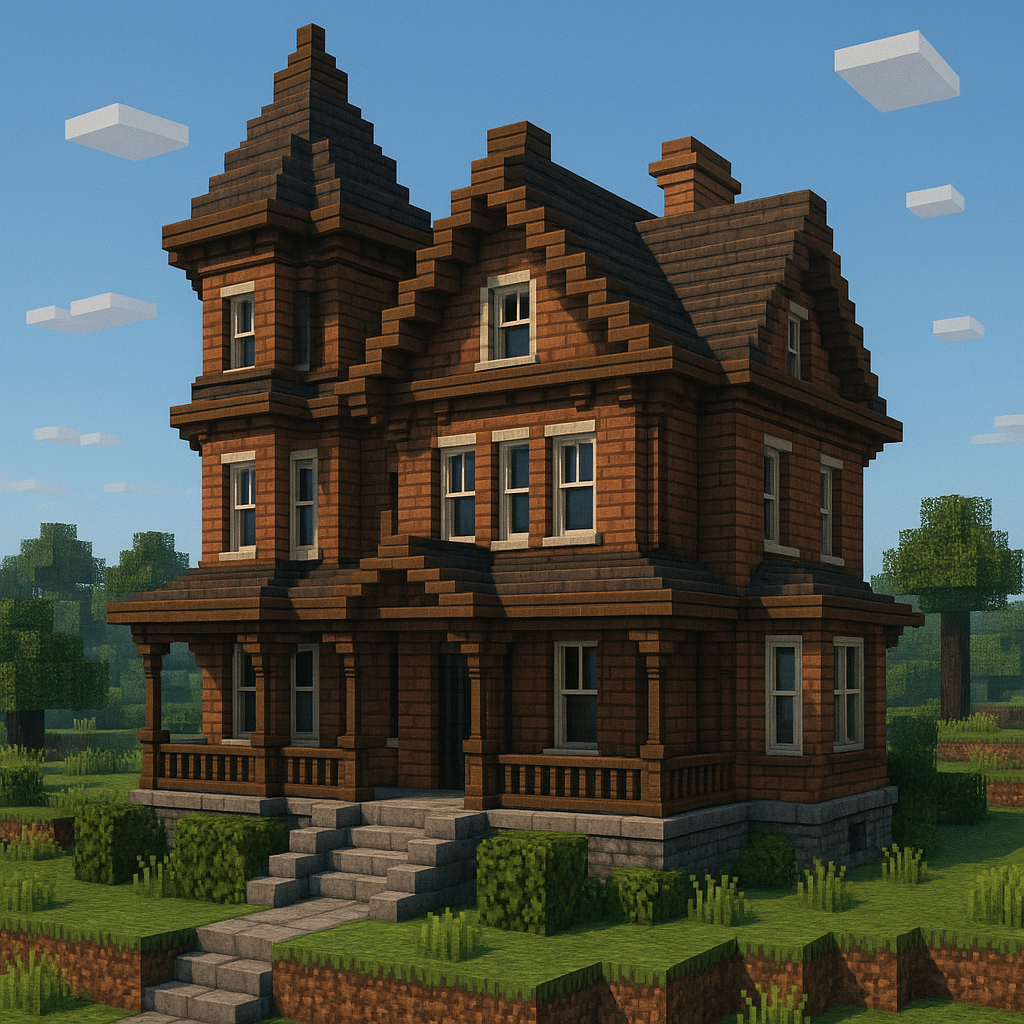
The Victorian era championed maximalism before minimalism was even a concept. Dense patterns, rich colors, and surfaces packed with ornaments defined middle-class prosperity, creating homes that simultaneously impressed visitors and sheltered family life. For Minecraft builders, this aesthetic presents a delicious challenge: how do you capture Victorian ornate excess while keeping interiors functional and readable in-game?
This guide shows you how to build Victorian Minecraft interiors that feel authentically period-appropriate without sacrificing playability. We’ll explore furniture design, color schemes, decorative density, and the crucial distinction between formal showpiece rooms and comfortable family spaces.
Understanding Victorian Interior Philosophy
Victorian homes weren’t just decorated—they were curated. Every object told a story about the family’s taste, travels, and social standing. Middle-class Victorians filled their homes with heavy furniture, saturated colors, and layered textiles, creating spaces that felt substantially different from the lighter Georgian aesthetic that preceded them or the Arts and Crafts simplicity that followed.
This density served practical and social purposes. Dark colors hid coal dust and urban grime. Heavy drapery blocked drafts in poorly insulated homes. Collections of ornaments demonstrated cultural refinement and purchasing power to visitors. The cluttered aesthetic wasn’t random chaos—it followed specific rules about what belonged where and how formal spaces differed from private family areas.
For builders working in Minecraft’s interior design system, understanding these principles means you can create Victorian spaces that feel historically grounded while remaining navigable and functional for gameplay.
Period-Appropriate Furniture Design
Victorian furniture was designed to impress. Heavy, carved pieces in dark woods like mahogany, walnut, or rosewood dominated parlours and dining rooms, often featuring deep-buttoned upholstery in plush velvet, damask, or brocade fabrics. In Minecraft terms, you’re building for visual weight and ornate detail using bulky silhouettes.
Core Furniture Pieces
Sofas and armchairs demand substantial presence. Use stairs with trapdoor arms and fence posts as legs, then add carpet layers to suggest deep upholstery and decorative fringes. Position these pieces against walls in formal rooms or create conversation groupings around fireplaces in family spaces. The key is making furniture look heavy enough to anchor the room visually.
Sideboards, chiffoniers, and bookcases should hug walls and reach ceiling height. Layer full blocks, slabs, and trapdoors to create tall imposing storage that Victorians used to display their best china and leather-bound books. Use dark wood variants like dark oak or spruce, adding item frames with books or decorative objects on top.
Dining sets need formality and visual heft. Build long tables using fence or wall supports underneath to create the appearance of carved legs, surrounded by matching chairs. Position a chandelier (glowstone with trapdoors or fences forming the frame) directly above the center to echo Victorian formal dining expectations. If you’re designing a medieval castle interior, you can adapt similar heavy table designs with even more rustic materials.
Beds and dressing tables work best with four-poster designs. Use fences at corners, extending to the ceiling, then add banners or glass panes as curtains. Create a vanity with a framed “mirror” (item frame, glass block, or decorative banner) positioned above a small table made from slabs and trapdoors.
Detail Techniques
Victorian furniture featured carved ornamentation that you can suggest through creative block placement:
- Turned legs: Alternate fences, walls, and trapdoors vertically to create furniture supports that look hand-carved
- Button tufting: Pattern carpet squares on stair-based seating to imply the diamond-quilted upholstery Victorians loved
- Carved panels: Use stair and slab combinations on cabinet fronts to suggest relief carving without adding excessive block depth
- Brass fittings: Gold pressure plates, buttons, or small carpet squares can represent decorative hardware
Rich Color Schemes and Pattern Work
Victorian interiors embraced deep, saturated colors that modern builders often hesitate to use. Burgundy, maroon, dark green, navy, chocolate brown, and rich purple dominated walls, upholstery, and drapery, typically warmed with gold, terracotta, or brass accents. These weren’t timid color choices—Victorians believed strongly pigmented walls created warmth and intimacy.
Wall Treatments
Combine dark planks or stone with colored blocks to create “painted” or “papered” panels. Use stairs and slabs to add wainscoting (the lower wall paneling Victorians installed to protect from chair backs) or dado rails dividing upper and lower wall sections. Striping using alternating wood types can suggest patterned wallpaper without overwhelming visual clarity.
For bedroom designs, slightly softer colors work well while maintaining Victorian character. Consider mixing dark oak planks with terracotta or concrete in burgundy or green shades.
Floor and Rug Patterns
Dark wood floors or tile-pattern blocks form your base, then layer rich carpet rugs in red, green, and navy to echo the patterned Wilton or Axminster rugs that covered Victorian floors. Alternate colored carpet blocks in stripes or borders to suggest Persian or Turkish designs without pixel-art complexity.
Pattern Integration
Victorian wallpaper featured elaborate florals, damasks, and geometric designs. In Minecraft, suggest these through:
- Vertical striping using alternating plank types or colored concrete
- Checkerboard patterns in subtle color variations (brown and dark brown concrete, for example)
- Border work using different materials at ceiling and floor height
- Concentrated pattern areas (like above fireplaces) rather than completely patterned walls
The goal is implying pattern richness while maintaining readability. Think of it as the Minecraft equivalent of Victorian design rather than literal recreation.
Victorian Clutter and Display Culture
“Horror vacui”—fear of empty space—defined Victorian decorating. Mantelpieces, sideboards, whatnots (tiered display shelves), and every flat surface became stages for ornaments, photographs, curiosities, and souvenirs. This wasn’t hoarder chaos but carefully curated display showing taste and traveled sophistication.
Surface Decoration Strategies
Mantels and shelving should burst with detail. Use candles, flower pots, skulls (representing Victorian interest in natural history), bottles, and player heads as curios. Stack bookshelves partially full, add armor stands holding decorative items, and cluster paintings above. The trick is creating density without blocking movement—Victorians filled horizontal surfaces but kept floor space relatively clear for circulation.
Display furniture replicates the whatnots and glass cabinets Victorians built specifically for collections. Create narrow shelving units using trapdoors and slabs arranged in tiers, then populate with “china” represented by pots, small banners, or carefully positioned armor stands. Glass pane cabinets work well in dining rooms for protecting best dishes.
Wall arrangements should feel gallery-like, especially in parlours and hallways. Cluster paintings, item frames with maps, and banners to create the layered wall displays Victorians loved. They believed empty wall space looked impoverished, so fill vertical surfaces thoughtfully.
Textile layering adds crucial Victorian character. Combine carpet runners on floors, carpet “tablecloths” on dining tables, and banner “curtains” at windows. This layering creates depth and warmth that distinguishes Victorian spaces from other interior design styles you might explore in Minecraft.
Balancing Clutter with Playability
Victorian density presents a genuine challenge in Minecraft. You need enough objects to feel period-appropriate without creating navigation nightmares or framerate issues. Focus clutter on room perimeters and corners while keeping central pathways clear. Use non-solid blocks (trapdoors, carpets, banners) for decoration since they don’t impede movement. In kitchen spaces, this balance becomes especially important—you want Victorian density without blocking functional areas.
Formal vs. Family Victorian Spaces
Victorian homes rigidly distinguished between public rooms that projected status and private spaces prioritizing comfort. Understanding this separation lets you create interiors that feel authentically layered and historically accurate while serving different gameplay purposes.
Room Function Comparison
| Aspect | Formal Rooms (Parlour, Dining) | Family Rooms (Morning Room, Nursery, Bedroom) |
|---|---|---|
| Purpose | Impress guests, display status, host formal gatherings | Daily living, hobbies, child-rearing, quieter leisure |
| Color & Mood | Darkest, richest colours; strongest patterns; dramatic contrast | Still warm and rich but slightly lighter or softer combinations |
| Furniture Style | Heaviest, most ornate pieces; matching sets; big dining tables | Smaller, more comfortable seating; work tables, desks, rocking chairs |
| Clutter Level | Curated clutter: best china, art, and statement collections | Functional clutter: toys, books, sewing, everyday objects |
| Focal Points | Fireplace with overmantel mirror, chandelier, grand sideboard | Bed or hearth, writing desk, reading nook by window |
| Behaviour Expectations | Formal etiquette, good posture, “best” clothes and manners | Relaxed posture, family-only activities, more practical layouts |
Implementing the Hierarchy
Front-facing rooms near your entrance should receive your darkest colors, fussiest furniture, and maximum decoration. Create strong symmetrical arrangements with clear focal points like elaborate fireplaces or grand windows. These spaces demonstrate your building sophistication to visitors.
Back or upper-floor rooms can use the same material palette but in simpler patterns. Add more storage, writing desks, and hobby corners that suggest actual daily living. A morning room might have a comfortable reading chair by a window, a small writing desk, and shelves of books rather than the formal matching furniture sets in the parlour.
This contrast makes houses feel lived-in and authentically Victorian. It also helps with gameplay—formal spaces become impressive showpieces while family spaces remain functional for survival activities or roleplay.
Circulation and Privacy
Victorian homes featured complex circulation systems that separated servants, family, and guests. While you might not build full service quarters in Minecraft, creating clear routes between public and private spaces adds authenticity. Position formal rooms near the main entrance, then tuck family bedrooms, service areas, and storage toward the back or upper floors.
Consider how your interior connects to the broader architectural style you’re building. If you’re working on Mediterranean-influenced builds or exploring other historical periods, the formal/informal room distinction adapts across cultures and eras.
Lighting for Victorian Atmosphere
Victorians relied on gas lamps and candles, creating warm but relatively dim interior lighting. In Minecraft, this translates to strategic light source placement that creates atmosphere without leaving dangerous dark spawning areas.
Period-Appropriate Light Sources
Chandeliers work best in formal dining rooms and entrance halls. Build elaborate frames using fences, chains, or trapdoors around central glowstone blocks. Add candles or soul lanterns to corners for additional period detail.
Wall sconces should flank fireplaces and appear regularly along hallways. Use trapdoors with candles placed on them, or position wall lanterns between paintings and other decorative elements.
Table lamps didn’t exist in early Victorian homes but oil lamps did. Use candles on decorative plates (pressure plates), surrounded by flower pots or bottles to suggest glass lamp chimneys.
Fireplaces provided primary lighting and heating. Make these substantial focal points with ornate surrounds and mantels dense with objects. The fire itself serves as both period-appropriate light and architectural emphasis.
Lighting Design Principles
Keep most light sources at eye level or below to create warmer atmosphere than overhead lighting. Use multiple smaller light sources rather than fewer bright ones—this mimics the distributed candlelight Victorians experienced. In living room designs, this approach creates especially effective cozy atmosphere.
Balance authentic dimness with gameplay safety. Use concealed glowstone under carpets or behind decorative elements to raise ambient light levels without obviously modern fixtures.
Building Victorian Rooms: Practical Examples
Let’s walk through designing specific Victorian spaces using the principles we’ve covered.
The Victorian Parlour
Your parlour makes first impressions and showcases your best furnishings. Start with dark oak plank walls divided by spruce stair wainscoting at half height. Add burgundy or dark green concrete accent walls on one side, then layer with clustered paintings.
Position your heaviest furniture symmetrically: matching sofas facing each other across a low table, or a sofa and two armchairs in conversation arrangement around the fireplace. Use dark oak stairs with fence arms, carpet upholstery detail, and small carpet throws draped over backs.
Build an imposing fireplace as the room’s focal point—blackstone surround, mantel loaded with candlesticks (candles on flower pots), small decorative items (skulls, coral, books in item frames), and a large painting or mirror above. Flank with matching wall sconces.
Add a substantial bookcase filling one wall, a display cabinet with glass panes showing “china,” and a whatnot in the corner with tiered shelves. Cluster paintings asymmetrically on walls, add a patterned carpet in deep red or green, and position a central chandelier.
The Family Morning Room
Morning rooms were less formal spaces where families gathered for breakfast, letter-writing, and daytime activities. Use slightly lighter colors—perhaps mixing dark oak with oak planks, terracotta accents instead of deep burgundy.
Include a writing desk positioned near a window for natural light—use a simple table made from slabs with a lectern or book in an item frame suggesting correspondence. Add an upholstered chair that’s comfortable rather than imposing.
Create a reading corner with a more relaxed armchair, small side table with a candle, and accessible bookshelves. Add a fireside rug for informal seating. Include practical storage—closed cabinets rather than display pieces, containers for sewing supplies or children’s toys.
This room should feel warmer and more lived-in than your formal parlour while maintaining Victorian character through appropriate furniture shapes and decorative density.
The Victorian Bedroom
Victorian bedrooms prioritized comfort more than other spaces while maintaining ornate character. Build your four-poster bed as the central focus—fences at corners extending to ceiling, banners or glass panes as curtains, and rich carpet as a bedspread and floor rugs.
Add a substantial wardrobe (closed cabinet built from dark oak, blackstone, and trapdoor doors), a washstand (small table with water cauldron and flower pots suggesting basin and ewer), and a dressing table with mirror. Position a comfortable reading chair near a window if space allows.
Layer textiles heavily—carpet rugs on the floor, carpet runners, banner curtains at windows. Use slightly softer wall colors than formal rooms but maintain depth and richness. Add personal touches like framed family portraits, books on bedside tables, and a jewelry box (trapped chest with decorative surrounds).
For more bedroom-specific techniques, review our comprehensive Minecraft bedroom design guide which covers multiple historical styles including Victorian approaches.
Materials and Block Palette
Selecting appropriate Minecraft blocks makes or breaks Victorian aesthetic authenticity.
Primary Building Blocks
Dark woods (dark oak, spruce) form your furniture and paneling foundation. These represent the mahogany, walnut, and rosewood Victorians preferred. Use dark oak planks for substantial furniture and wall paneling, spruce for structural elements and variation.
Stone materials work for fireplaces and structural accents. Blackstone, dark stone bricks, and polished andesite create Victorian-appropriate hearths and architectural details.
Colored blocks for walls and accents should be deeply saturated. Use terracotta in brown, red, and orange tones; concrete in burgundy, dark green, and navy; glazed terracotta for patterned accent areas.
Metals represented by gold pressure plates and buttons suggest brass hardware and decorative fittings that Victorians used extensively.
Decorative Elements
Carpet colors are crucial for Victorian character. Red, dark green, navy, brown, and purple carpets should dominate your palette. Use them for rugs, upholstery detail, tablecloths, and wall runners.
Glass works for cabinet doors, lamp chimneys (flower pots with glass block tops), and window designs. Combine with panes for elaborate window treatments.
Trapdoors are versatile decorative elements—furniture details, wall paneling, cabinet doors, and chandelier components. Dark oak and spruce trapdoors work best for Victorian aesthetics.
Material Coordination
Keep your palette relatively constrained—maybe four or five primary materials plus accent colors. Victorians used rich colors intensively but generally limited their range per room. A dark oak, spruce, burgundy concrete, and dark green carpet palette creates strong Victorian character without color chaos.
Common Victorian Building Mistakes
Even experienced builders stumble on Victorian interiors. Avoid these frequent pitfalls:
Over-lighting breaks period atmosphere. Don’t install modern-looking overhead lighting grids. Victorian homes were genuinely dimmer than contemporary spaces—embrace that while maintaining gameplay safety through careful light source positioning.
Under-furnishing defeats the purpose. Victorian spaces were notably full. If your rooms feel sparse, you’re not capturing the aesthetic. Add more surface decoration, layer more textiles, and cluster more paintings before deciding you’ve overdone it.
Wrong furniture scale makes spaces feel off. Victorian furniture was substantial and heavy. Avoid delicate-looking builds using single stairs or slim profiles. Add visual weight through layered blocks and chunky silhouettes.
Ignoring hierarchy creates monotonous interiors. Not every room should receive identical treatment. Formal spaces need maximum decoration while family areas can relax slightly while remaining period-appropriate.
Modern color choices particularly light, bright palettes undermine Victorian character. Resist the urge to lighten things up. Victorians genuinely liked saturated, dark colors. Trust the historical aesthetic even when it feels counterintuitive.
Adapting Victorian Style for Different Build Scales
Victorian interior principles work across building scales from starter homes to elaborate mansions.
Compact Victorian Cottages
Smaller builds focus on key Victorian elements rather than full room sets. Create one formal parlour with your most ornate furniture and richest colors, then simplify bedrooms and service areas while maintaining appropriate materials and color relationships.
In small spaces, clutter becomes especially important—it’s what makes cramped Victorian cottages feel authentically period rather than just small and dark. Layer decorative elements on surfaces while keeping floor plans functional. If you’re building in biomes with limited resources, check our biome building guides for material adaptation strategies.
Grand Victorian Mansions
Larger builds let you fully develop the formal/informal room hierarchy. Create impressive public spaces near the entrance—a large entrance hall with grand staircase, formal dining room, and drawing room receiving maximum decoration and finest furniture.
Add specialized Victorian rooms like libraries (walls of bookshelves, leather-upholstered reading chairs, globe), billiard rooms (green carpet “table,” warm wood paneling), and conservatories (glass walls, exotic plants, wicker furniture suggesting palm houses).
Develop servant areas with plainer finishes but maintained Victorian material palette—kitchens, sculleries, and servant bedrooms use simpler furniture and lighter decoration but still avoid modern aesthetics.
Combining Victorian with Other Styles
Victorian architecture and interiors appeared globally, adapting to local climates and building traditions. You can combine Victorian interior principles with various architectural styles.
Gothic Victorian
Emphasize pointed arch elements, darker color schemes, and more dramatic ornamentation. Use blackstone and dark stone extensively, add gargoyle-style decorative elements (skulls, ominous banners), and layer darker textiles. This approach works brilliantly with medieval castle designs adapted to Victorian residential settings.
Colonial Victorian
Lighter wood tones (oak instead of dark oak), more white-painted elements, and better ventilation arrangements suggest British colonial or American Victorian homes. Add verandas, larger windows, and slightly simplified decoration while maintaining Victorian density and formality principles.
Victorian-Meets-Steampunk
For those interested in steampunk industrial building, Victorian interiors provide perfect residential counterpoints to industrial workspaces. Maintain heavy Victorian furnishings but add copper pipes as decorative elements, mechanical-looking devices on desk surfaces, and exposed brass fittings. This combination creates unique steampunk aesthetic grounded in historical Victorian style.
Exterior-Interior Coordination
Victorian interiors should complement your exterior architectural choices. If you’re building an elaborate Victorian exterior with gingerbread trim, towers, and multiple rooflines, your interiors need corresponding complexity and ornamentation.
Entrance halls should immediately establish Victorian character—position a substantial staircase with ornate newel posts (fences with decorative tops), dark wallpaper effect, and clustered paintings. This announces the interior aesthetic before visitors enter other rooms.
Window treatments visible from outside matter significantly. Use banner curtains in rich colors tied back with carpet holders, suggesting the heavy drapery Victorians installed. These add exterior visual interest while serving practical indoor purposes.
Consider how architectural fundamentals translate from exterior to interior—the same attention to proportion, symmetry in formal spaces, and material coordination applies at both scales.
Victorian Interiors in Survival Mode
Building Victorian authentically in survival requires planning and resource gathering strategies.
Material Prioritization
Focus first on woods—dark oak and spruce form your furniture and architectural backbone. Establish tree farms early, or locate dark oak forests and taiga biomes for harvesting. Sheep farms in sufficient variety (red, green, brown, purple) become crucial for carpet production since Victorian style demands extensive textile use.
Terracotta requires mesa/badlands biomes or extensive clay deposits near rivers. Stockpile clay early and smelt it into terracotta, then craft colored versions for wall treatments. Concrete requires sand and gravel plus dyes, making it more resource-intensive but ultimately more versatile than terracotta for color matching.
Progressive Building
Start with room structure and primary furniture, then add decorative layers progressively as resources accumulate. A survival Victorian build might evolve: basic dark oak walls → wainscoting added → carpets layered → wall decorations clustered → lighting refined → final details completed.
This approach keeps spaces functional while you gather materials, and actually mirrors how Victorian homeowners accumulated furniture and decorations gradually as families became more prosperous.
Resource-Efficient Victorian Style
If materials prove challenging, prioritize Victorian elements that deliver maximum aesthetic impact for minimum resources:
- Wall treatments: Wainscoting using stairs and slabs requires fewer blocks than full colored walls
- Furniture shapes: Careful stair and trapdoor placement creates Victorian furniture profiles without extensive solid block usage
- Targeted density: Concentrate decorative objects in most visible areas (entrance, parlour) while family rooms stay simpler
- Color through carpets: Wool is relatively easy to farm, so use carpet color extensively for visual richness when colored blocks are scarce
Victorian Living: Functional Considerations
Beyond aesthetics, Victorian interiors should support actual Minecraft gameplay needs.
Storage Integration
Victorian furniture naturally includes abundant storage. Build wardrobes, chiffoniers, and sideboards with functional chests hidden inside. Armor stands in corner positions work as both decoration and practical equipment storage. Use barrel blocks integrated into furniture designs—their texture works well for Victorian wooden cabinet aesthetics.
Bookcases served storage and display purposes simultaneously. Build floor-to-ceiling bookshelves that actually store enchanted books alongside decorative book items. Integrate lecterns for practical enchanting access disguised as reading materials.
Workspace Accommodation
Victorian homes included spaces for daily tasks—writing correspondence, needlework, household accounts. Create these functional areas using period-appropriate furniture. A writing desk with lectern provides enchanting access. A work table with crafting bench integration supports practical needs while maintaining aesthetic consistency. If you’re working on farmhouse interiors, similar functional integration applies with Victorian-style furniture shapes.
Multiplayer Considerations
In multiplayer servers, Victorian homes offer natural gathering spaces. The formal parlour serves as meeting area while private bedrooms provide personal bases. The dining room functions perfectly for group meals or roleplay scenarios. Kitchen and service areas (if built) separate functional activities from social spaces.
Victorian density also offers security advantages—cluttered rooms make valuable items less obvious and provide more hiding spots than minimalist modern builds.
Taking Your Victorian Builds Further
Once you’ve mastered basic Victorian interior principles, explore deeper historical accuracy and creative elaborations.
Historical Research
Study actual Victorian interior photographs and illustrations available through museum archives and historical societies. Notice how different economic classes interpreted Victorian style—wealthy merchant houses versus middle-class terrace homes versus working-class cottages. This research sparks ideas for varied builds representing different Victorian social contexts.
Victorian interior design evolved significantly across the era (roughly 1837-1901). Early Victorian interiors tended toward darker, heavier aesthetics while late Victorian embraced Arts and Crafts influences with slightly lighter treatments. Your builds can reflect these temporal variations.
Regional Victorian Variations
Victorian style spread globally with different regional adaptations. British Victorian differs from American Victorian, while colonial Victorian in India or Australia adapted to tropical climates. Research these variations for unique build inspiration that maintains Victorian character while offering visual variety.
Documentation and Sharing
Victorian Minecraft builds make impressive portfolio pieces. Document your interiors thoroughly with screenshots showing room arrangements, furniture details, and decorative density. Share builds with building communities focused on historical or realistic construction. Victorian complexity often impresses viewers used to simpler styles, and the techniques you’ve mastered transfer well to other historical periods.
Mastering Victorian Minecraft Interiors
Victorian interior design challenges Minecraft builders to embrace maximalism while maintaining functionality. By understanding period-appropriate furniture shapes, rich color palettes, strategic clutter placement, and the formal/informal room hierarchy, you create spaces that feel authentically Victorian while remaining playable and visually clear.
The key lies in balancing density with navigation, historical accuracy with creative interpretation, and ornate aesthetics with practical gameplay needs. Start with strong furniture silhouettes and appropriate color schemes, then layer decoration progressively until rooms feel appropriately full without becoming chaotic.
Victorian interiors reward careful attention to detail and commitment to historically grounded building choices. The style demands more from builders than simpler aesthetics, but the resulting spaces possess unique character and impressive complexity that distinguishes your work from generic Minecraft construction.
Whether you’re building a modest Victorian cottage, an elaborate urban mansion, or adapting Victorian principles to fantasy or steampunk contexts, these techniques provide foundation for compelling, livable Victorian Minecraft interiors that respect historical precedent while serving contemporary gameplay needs.
Now go forth and clutter those surfaces—the Victorians would be proud.
All LEGO® and Minecraft references in this article are used for descriptive purposes. LEGO® is a trademark of the LEGO Group of companies. Minecraft is owned by Mojang Studios, a subsidiary of Microsoft. Bricks and Blocks Creative is not associated with or endorsed by the LEGO Group or Mojang Studios.


