The Basalt Deltas stand as the Nether’s most visually dramatic and technically challenging biome for builders. With jagged volcanic terrain, relentless magma cube spawns, and a limited palette of dark materials, this hostile environment demands a fundamentally different approach than building in other Nether biomes. Yet mastering construction here unlocks some of Minecraft’s most striking architectural possibilities—from brutalist volcanic fortresses to industrial refineries suspended over molten rock.
This guide breaks down everything you need to know about building successfully in the Basalt Deltas, from understanding the biome’s unique challenges to designing builds that work with the terrain rather than against it.
Understanding Basalt Delta Characteristics
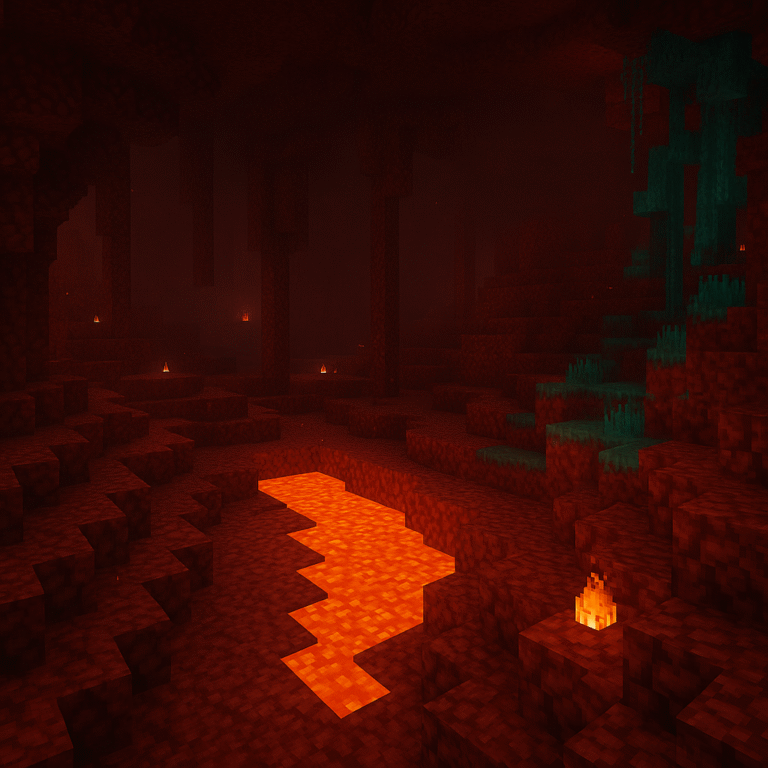
The Basalt Deltas present a harsh volcanic landscape that shapes every building decision you’ll make. The biome consists primarily of basalt columns, blackstone outcrops, magma blocks, and frequent lava pockets, all shrouded in ash-filled air that reduces visibility and creates a perpetually ominous atmosphere.
Terrain here is exceptionally uneven, featuring dramatic cliffs, natural basalt pillars reaching toward the Nether ceiling, and treacherous gaps filled with lava. Unlike the relatively flat expanses of Nether wastes or the organic growth patterns of warped forests, the Deltas force you to think vertically and work around existing geological features.
The mob situation creates the biome’s defining challenge. Only ghasts and magma cubes spawn naturally here, but magma cubes have an extraordinarily high spawn weight. Unlike most hostile mobs, magma cubes spawn regardless of light level, rendering traditional torch-based spawn-proofing completely ineffective. This constant mob pressure means every build must incorporate active spawn management from the foundation up.
Navigation poses another significant hurdle. The combination of awkward pathing, limited safe surfaces, and frequent lava exposure makes simply moving through the biome dangerous. Your builds need to address movement and safety as core design elements rather than afterthoughts.
Working With Basalt Columns
Basalt’s natural columnar formation is both the biome’s signature visual element and your most valuable building asset. Rather than flattening terrain or importing massive quantities of non-native blocks, skilled Delta builders learn to incorporate existing basalt pillars into their designs.
These natural columns function perfectly as structural anchor points for platforms, bridges, and cliff-side bases. Building outward from existing pillars preserves the biome’s dramatic vertical silhouette while providing stable foundations that blend seamlessly with the environment. A suspended walkway system connecting multiple natural spires, for instance, feels far more authentic than a flat platform that ignores the terrain entirely.
When you need to harvest basalt for construction, strip-mining columns from the top down keeps lava exposure manageable. This approach also gives you pre-shaped “pillar” structures you can hollow out for interior rooms or carve into for tunnel networks connecting different sections of your base. A basalt spire that looks solid from the exterior can house a complete vertical storage system, farms, or living quarters inside.
Material mixing within your basalt work adds crucial visual depth. Combining raw basalt, polished basalt, and carefully placed blackstone patches creates a layered texture that mimics cooled and fractured volcanic rock. This subtle variation prevents the monotonous appearance that comes from using a single block type across large structures.
The directional properties of basalt and polished basalt let you create interesting patterns and emphasize structural lines. Rotating basalt to run horizontally across a wall while keeping pillars vertical, or using polished basalt for edges and corners while filling with regular basalt, adds architectural detail without requiring additional block types.
Resource Gathering in the Deltas
The Basalt Deltas offer a surprisingly complete palette for self-contained building projects, though the range skews heavily toward dark, industrial aesthetics. Understanding what’s readily available on-site versus what you’ll need to import shapes your design approach from the start.
Core building blocks available in abundance include basalt, polished basalt (crafted from basalt), blackstone and its variants (polished blackstone, blackstone bricks, polished blackstone bricks), magma blocks, gravel, and small amounts of netherrack and glowstone. This gives you a robust structural toolkit spanning rough industrial looks through refined architectural detailing.
🌋 Basalt Delta Survival Checklist
Track your preparation for building in Minecraft’s most hostile biome
📦 Pre-Construction Preparation
0/7🛡️ Essential Spawn-Proofing
0/6⚠️ Safety Features
0/5🏗️ Base Functionality
0/8Your progress is automatically saved in your browser! You can close this page and return anytime to pick up where you left off. Complete sections in order for the safest and most efficient build process.
Blackstone deserves special attention as it functions identically to cobblestone for crafting purposes. You can craft tools, furnaces, and all stone-style decorative blocks entirely within the Nether using blackstone, making it possible to establish a completely self-sufficient Delta base without returning to the Overworld. For builders pursuing a pure Nether survival challenge, this versatility proves invaluable.
Ore generation in the Deltas actually exceeds typical Nether biomes—nether quartz and nether gold ore spawn more frequently here than in netherrack-dominated areas. This makes the Deltas excellent locations for early-game XP grinding and gold farming, resources you can integrate directly into your build’s economy and decoration.
The limited block palette might seem restrictive at first, but it actually enforces a focused aesthetic that prevents visual clutter. When every block in your build shares a dark volcanic theme, even simple structures achieve a cohesive, intentional appearance. You’re working within a defined style rather than trying to make dozens of disparate materials harmonize.
For larger projects requiring color accent or functional diversity, you’ll want to establish secure transportation routes to adjacent biomes. Crimson or warped wood from nearby forests, crying obsidian for decorative accents, or soul sand for specific functional builds all require planned excursions beyond your Delta territory.
Managing Magma Cube Spawns
Magma cube control represents the single most important technical challenge in Basalt Delta building. Unlike other hostile mobs, magma cubes spawn in the Deltas regardless of light level, instantly invalidating the spawn-proofing methods that work everywhere else in Minecraft. You need a completely different approach built on non-spawnable blocks and terrain manipulation.
The foundation of magma cube management is understanding spawnable versus non-spawnable surfaces. Cubes cannot spawn on transparent blocks, partial blocks, or most interactive blocks. This means slabs (particularly bottom slabs), stairs, buttons, pressure plates, fences, walls, and glass all prevent spawns while remaining fully functional for building.
Flooring design becomes critical. Using bottom slabs for all floors and walkways dramatically reduces cube spawns in and around your base while maintaining full walkability. The visual difference is minimal—especially when using blackstone or basalt slabs that match the biome’s palette—but the spawning implications are enormous. A fully slabbed platform might see one-tenth the magma cube activity of a solid block platform of identical size.
Ceiling treatment matters almost as much as floors. Slabbing ceilings or using stairs as decorative exposed beams prevents cubes from spawning above you and dropping down into supposedly safe spaces. For tall interior spaces where a low ceiling would feel claustrophobic, creating a lattice of non-spawnable blocks (fences, chains, iron bars) maintains the open feel while blocking spawns.
Perimeter defense works differently than traditional mob-proofing. Rather than preventing spawns entirely (which is impossible for cubes), you redirect them away from high-traffic areas. A lava moat forces cubes to spawn beyond the barrier rather than at your doorstep. Trenches two to three blocks deep around key paths trap cubes without ruining player walkability—you can easily jump across while cubes fall in and get stuck.
Magma block trenches under glass create a visually striking defensive layer that leverages the cube’s own damage source against them. This works especially well for elevated platforms where you want transparent floors showing lava below; the magma blocks damage any cubes that do spawn while the glass prevents them from jumping up to your level.
For builders who want to turn the problem into an asset, controlled magma cube spawning pads can become part of a magma cream farm integrated directly into your base’s infrastructure. Dedicating one section of your build to a cube farm with a collection system turns the biome’s most annoying feature into a renewable resource source.
Build Styles That Suit the Deltas
The Basalt Deltas’ aggressive aesthetic demands architectural styles that embrace rather than fight the biome’s volcanic character. Three primary design approaches have proven particularly successful for Delta construction, each leveraging the environment’s strengths while addressing its challenges.
Volcanic Fortress
This brutalist style leans fully into the Deltas’ harsh, ancient atmosphere. Heavy use of blackstone bricks for walls and foundations paired with basalt ribs and columns creates structures that look carved from the volcanic terrain itself. Magma blocks used sparingly as accent lighting suggest the earth’s heat bleeding through aged stone.
The fortress approach works well for defensive builds, storage facilities, and survival bases where function matters more than comfort. Thick walls, small windows, and heavily reinforced entrances all feel thematically appropriate. You’re building something meant to withstand the Nether’s hostility, and that purpose shows in every architectural choice.
Details like blackstone brick arches, basalt pillar supports, and iron bar grilles over windows add medieval fortress character while using only biome-native materials. The ash-filled skyline visible through narrow windows or from battlements creates a perpetually dramatic backdrop.
Industrial Refinery
Treating the Basalt Deltas as a resource extraction and processing zone produces builds with exposed infrastructure, functional aesthetics, and deliberate rawness. This style incorporates gantries, pipelines made from basalt “columns,” suspended platforms over lava, and extensive use of chains and iron bars for structural support.
The industrial approach excels for farms, ore processing facilities, and builds centered on material production. It justifies exposed mechanical systems, utilitarian layouts, and prioritizing efficiency over comfort. Your base becomes part of the harsh environment rather than a refuge from it.
Key visual elements include scaffolding-style structures using stairs and slabs, “pipeline” runs connecting different facilities, crane-like projections over lava, and control stations with clear sightlines to work areas. Mixing polished and rough basalt suggests manufactured components alongside raw geological features.
This style also accommodates redstone systems naturally—exposed contraptions and visible wiring fit the industrial aesthetic perfectly rather than requiring concealment like they might in other building themes.
Arcane Temple
Taking a more fantastical approach, the arcane style treats the Deltas as the site of ancient Nether magic buried in fractured terrain. Polished basalt pillars, blackstone brick detailing, and atmospheric lighting in purple, cyan, or other unnatural colors suggest civilizations that predated the current Nether.
This style works beautifully for enchantment facilities, brewing stations, and builds with a mystical or ritualistic theme. The Deltas’ natural drama supports the sense of discovering something intentionally hidden in a hostile location.
Design elements include symmetrical layouts implying deliberate sacred geometry, polished basalt inlays suggesting runes or magical circuitry, and strategic use of colored glass or concrete powder for accent details. Beacon beams piercing up through temple structures create focal points visible across the biome.
The ruined temple variation on this style—suggesting structures damaged by time and volcanic activity—gives you flexibility to build asymmetrically or leave sections “unfinished” while maintaining thematic coherence.
Example Builds by Scale
🌋 Basalt Delta Base Planner
Get personalized building recommendations for your Nether base
Build Specifications
Available Resources
Select materials you already have access to:
Special Requirements
Small: Cliff-Face Starter Base
Concept & Purpose
A compact starter base tucked directly into a basalt cliff face offers quick establishment, natural protection, and minimal resource requirements. The cliff itself forms most of your walls, and the build’s small footprint makes complete spawn-proofing manageable even in the early game.
Core Blocks & Materials
- Basalt and polished basalt for any extensions or reinforcement of natural walls
- Blackstone for floors and decorative trim
- Glass or tinted glass for the front wall, providing light and lava views while maintaining security
- Iron doors for secure entry
- Magma blocks under colored glass for safe ambient lighting
- Bottom slabs for all interior floors and ceilings
Key Features & Layout
A 5×5 to 7×5 internal footprint provides enough space for essential survival facilities—crafting table, furnace setup, bed (for respawn point setting), and compact storage. Carve storage niches directly into the basalt walls rather than building freestanding chests; this saves space and feels integrated with the cliff face.
The glass front wall serves multiple purposes: it provides natural light from external lava sources, lets you monitor approaching mobs, and creates a visually striking contrast between the dark interior and the bright, dangerous exterior. Using tinted glass reduces interior brightness while maintaining outward visibility.
Bottom-slab all floors and ceilings without exception—even in a small base, a single magma cube spawn inside your protected space can be deadly in the early game. The slabs add minimal build time but prevent catastrophic defensive failures.
Position your entrance at an angle from any nearby lava flows or common cube patrol routes. A small overhang or alcove outside your door gives you a safe zone to check for mobs before exiting.
Expansion Potential
This starter design expands naturally into adjacent cliff sections as you gather resources. Tunnel horizontally into the cliff face for additional rooms, or dig upward and backward to create multiple floors stacked within the natural formation. Each room can maintain its own glass facade facing outward, creating a honeycomb of lit chambers visible from across the Delta.
Medium: Tiered Delta Outpost
Concept & Purpose
A multi-level outpost stepping down or up natural basalt terraces creates a substantial base while working with rather than against the terrain’s dramatic elevation changes. This medium-scale build serves as a full-featured operational center for Delta exploration and resource gathering.
Core Blocks & Materials
- Basalt and polished basalt for primary structure and platforms
- Blackstone bricks for architectural trim, stairs, and refined details
- Fences, walls, and chains for railings and decorative structural supports
- Glass or iron bars for viewing bunkers and protected observation points
- Mix of lighting types: magma blocks under glass, soul fire braziers, redstone lamps
Key Features & Layout
The central safe hub forms the heart of your outpost—a fully enclosed, spawn-proof area housing crafting stations, storage systems, and your respawn anchor. Build this hub at a mid-level elevation that naturally connects to multiple basalt terraces above and below.
Protected stairways and short bridges connect your hub to specialized zones on different levels. One terrace might hold a magma cube farm using controlled spawn pads and collection systems. Another could serve as a nether wart farm if you’ve brought in materials from a nearby fortress or crimson forest. A third might function purely as a secure portal room linking to your Overworld base.
Each level should be clearly visible from the central hub, creating intuitive navigation even in the Delta’s reduced visibility. Use consistent path materials—polished basalt edges with blackstone brick inlays work well—and add wayfinding beacons like colored glass pillars or distinctly shaped structures at each terrace.
Enclosed viewing bunkers at strategic points let you safely observe the surrounding terrain without exposure to ghasts or accidental lava falls. These bunkers double as emergency refuges if you’re caught outside during a magma cube surge.
The modular terrace design means you can expand by claiming additional levels as needed. Each new terrace integrates with the existing structure while maintaining independence—if part of your base becomes compromised, other sections remain functional.
Defensive Considerations
Implement layered defenses around high-traffic connectors. The main paths between terraces get double protection: bottom-slab coverage plus side railings that prevent cubes from approaching directly. Lower-priority terraces might rely on simpler perimeter slabs and the natural deterrent of elevation changes.
Consider adding panic rooms—small, fully enclosed spaces on each major level that you can quickly seal yourself into if overwhelmed. These need only be 2×2×2 interior space with an iron door and basic supplies, but they can save your life and prevent death loops during unexpected mob swarms.
Large: Basalt Spire Citadel
Concept & Purpose
A major base wrapped around or suspended between multiple basalt pillars represents the ultimate expression of Delta building. This large-scale citadel uses the biome’s natural spires as both structural foundation and visual centerpiece, creating an imposing presence visible from anywhere in the area.
Core Blocks & Materials
- Layered basalt variants (regular, polished, smooth) for complex textural work
- Blackstone bricks and polished blackstone for architectural refinement
- Nether brick or crimson wood for material contrast in key areas
- Chains, fences, and iron bars for suspended walkway supports
- Large-scale lavafall features integrated into walls
- Extensive glass use for protected viewing corridors
Key Features & Layout
Select a cluster of three to five natural basalt spires as your foundation. The spires don’t need to be perfectly aligned—irregular spacing actually creates more interesting architecture and multiple sight lines. Your build will connect these pillars at various elevations, creating a three-dimensional structure that dominates the vertical space.
The central spire houses your primary vertical circulation—main stairwells or elevator systems connecting all major levels—plus high-security storage for valuable items. Hollowing out this spire from top to bottom while preserving its external appearance creates a dramatic interior shaft that maintains the pillar’s iconic silhouette.
Ring roads at different Y-levels connect the peripheral spires, creating fast travel routes around your base without constant vertical movement. A ground-level ring handles heavy cargo and livestock movement. Mid-level rings serve as residential or workshop spaces. Upper rings provide quick access to farms built above lava or to Nether ceiling access points.
Suspended walkways bridging between spires use chains or fences as visible supports, creating the impression of improvised construction responding to the challenging terrain. Make these walkways partially enclosed—walls on the sides but open ceilings—so they feel like they’re suspended through hostile space rather than completely protected corridors.
The lower levels beneath your main structures get fully slabbed or covered with glass to create spawn-proof gathering spaces. You can turn these into public areas—farms, markets in multiplayer, or communal facilities—while the elevated sections remain private or administrative.
Integrate large lavafalls into your walls wherever natural lava sources exist nearby. Channeling these flows through your structure adds dramatic lighting and movement while serving as natural hazard barriers. Position them at property boundaries or between functional zones where they create separation without requiring additional wall construction.
Advanced Technical Systems
A citadel-scale build justifies sophisticated infrastructure. Install inter-spire item transport using water streams through the ring road system or dropper networks through vertical shafts. Your central spire can house a complete sorting system receiving inputs from farms on multiple levels.
Beacon pyramids built into lower levels provide status effects across your entire base while using the spawn-proof construction those pyramids require to reinforce your defensive perimeter. Position them centrally so their effects reach all work areas.
Consider dedicating one entire spire to farms—magma cube cream production, nether wart if available, even overworld crops if you’ve imported sufficient materials. Vertical farming maximizes your yield per horizontal space unit while keeping agricultural operations contained.
Redstone networks linking your spires enable base-wide systems: synchronized lighting controls, security lockdowns, or even decorative elements like timed lavafall releases for visual effect.
Lighting and Navigation Strategies
Standard Minecraft lighting principles don’t apply in the Basalt Deltas—magma cubes ignore light level completely, decoupling illumination from spawn control. This fundamental shift means your lighting serves purely visual and navigational purposes, freeing you to prioritize aesthetics and functionality in new ways.
Atmospheric Lighting Options
Lavafalls create dramatic natural lighting that emphasizes the biome’s volcanic nature while providing strong illumination over large areas. Channeling lava down exterior walls or creating contained lavafall features inside glass tubes gives you controllable ambient light that feels indigenous to the environment.
Magma blocks under glass produce a warm orange glow perfect for path marking and area definition. This technique works especially well for elevated platforms where you want transparent floors—the magma blocks provide light, create visual interest showing layers beneath your structure, and damage any mobs that somehow spawn below the glass.
Shroomlights offer a warmer, more organic alternative to glowstone while maintaining high light output. Though not naturally occurring in the Deltas, importing them from fungal forests creates pleasant accent lighting that stands out against the dark palette without clashing stylistically.
Redstone lamps give you controllable, clean lighting ideal for interiors and work areas. Their sharp edges and mechanical appearance suit industrial-styled builds particularly well. Combined with daylight sensors or player detection circuits, they enable responsive lighting that activates only when and where needed.
Soul fire lighting—soul torches, soul lanterns, or soul fire on soul sand/soil—creates an eerie blue glow that works beautifully for arcane or mystical builds. The reduced light level compared to normal fire actually benefits the moody atmosphere, and the color contrast against the orange lava and brown/black blocks is striking.
Wayfinding and Path Design
Clear navigation benefits from consistent material choices and visual rhythm. Establish a path language using specific block combinations—for example, polished basalt edges with blackstone brick inlays, or magma blocks under glass bordered by basalt slabs. When players see this pattern, they immediately recognize it as a safe, established route.
Color coding major routes using concrete powder or colored glass accents helps with large-base navigation. North-south paths might have red accents while east-west paths use blue. Vertical connectors could be marked with green. These small touches prevent disorientation in the Deltas’ naturally confusing terrain.
Elevation changes need clear marking to prevent falls into lava. Using stairs rather than abrupt drops wherever possible helps, but when drops are unavoidable, frame them with contrasting materials and ensure the landing area is well-lit and spawn-proof. Nobody should accidentally step backward off a platform into lethal terrain.
Landmark structures at key intersections or destinations make navigation intuitive even for new visitors. A distinctive tower at your main entrance, a unique bridge design leading to your farms, or a beacon beam marking your portal chamber all serve as mental waypoints that build a cognitive map of your territory.
Safety Corridors
Enclosed or partially roofed paths protect you from ghast fireballs while maintaining the sense of traversing dangerous terrain. Full enclosure creates absolute safety but can feel claustrophobic over long distances. Partial roofing—covering the ceiling but leaving side walls open or using fence/wall barriers—provides protection from above while preserving visibility and the atmospheric experience of being in the Deltas.
Window slits in enclosed corridors and viewing balconies on protected platforms let you pause and observe your surroundings safely. These architectural features serve practical purposes—checking for mobs before exiting, monitoring farm productivity, or simply enjoying the view—while adding visual interest to otherwise purely functional structures.
Emergency lighting along all major paths ensures you never lose your way even if primary lighting fails or you’re being chased by mobs. Soul torches placed at regular intervals provide backup illumination that remains visible even against heavy lavafall lighting.
Related: Minecraft Biomes Guide | Complete Nether Building Guide | Biome Exploration Checklist
Building in the Basalt Deltas transforms one of Minecraft’s most hostile biomes into a showcase for dramatic architecture that simply isn’t possible anywhere else. The challenges that make casual building difficult—aggressive terrain, constant mob pressure, limited materials—become your greatest assets once you understand how to work with them. Your finished base won’t just be functional; it’ll be an achievement that demonstrates true mastery of Minecraft’s most demanding building environment.
What style are you planning for your Delta base—volcanic fortress, industrial refinery, or something completely different?