Whether you’re setting out to find that perfect building spot or hunting for rare resources, exploring Minecraft’s diverse biomes requires more than just wandering off in a random direction. Each biome type demands specific preparation, and knowing what to bring—and what to look for once you arrive—can mean the difference between a successful expedition and respawning empty-handed at your bed.
This comprehensive minecraft exploration guide breaks down exactly what you need in your inventory before you leave home, organized by biome type. We’ll cover the essential exploration checklist that works everywhere, then dive into the specialized gear and resources you should prioritize for each major biome category.
Your Universal Exploration Kit
Before you specialize your loadout for specific biomes, you need a solid foundation that works across all Minecraft dimensions. This core kit handles the basics: survival, navigation, and opportunistic resource gathering.
⛏️ Minecraft Biome Exploration Checklist
Select your destination and check off your gear before you go
Essential Tools
At minimum, pack an iron pickaxe, axe, shovel, and sword or combat axe. A bow with at least one stack of arrows gives you ranged options, and a shield provides crucial defense. These tools let you mine unexpected ore veins, harvest unique wood types, and defend yourself against hostile mobs regardless of which biome you’re exploring.
Survival Fundamentals
Full iron armor or better keeps you protected, while 1-2 stacks of food prevent starvation during extended trips. Torches illuminate dark caves and mark your path. A water bucket serves multiple purposes: extinguishing fires, creating infinite water sources, and safely descending from heights. Most critically, bring a bed to reset your spawn point and skip dangerous nights.
Utility Blocks and Backup Gear
Carry 1-2 stacks of building blocks like cobblestone or dirt for bridging gaps and building emergency shelters. A crafting table and furnace let you process resources on the go, while spare coal or charcoal keeps your torches lit. Extra wood logs mean you can craft replacement tools if yours break at an inopportune moment.
Navigation Tools
Maps or locator maps prevent you from getting hopelessly lost, though coordinate tracking via the debug screen (F3 on Java Edition) works just as well. Keep a spare boat in your inventory for crossing rivers and oceans quickly. For longer expeditions into dangerous territory, consider an ender chest with backup gear and a Silk Touch pickaxe to move it—this creates a portable bank of emergency supplies.
Temperate Starting Biomes: Plains, Forests, and Taiga
These biomes feel comfortable because they offer abundant resources and few environmental hazards. Plains, forests, and taiga regions provide excellent wood supplies, easy animal access, and frequent village spawns.
What to Bring
Shears prove invaluable for harvesting wool from sheep and collecting leaves for decorative building. Extra axes handle the heavy wood gathering these biomes encourage. Seeds and buckets let you establish quick farms if you’re planning to stay awhile or build an outpost.
Resources to Hunt
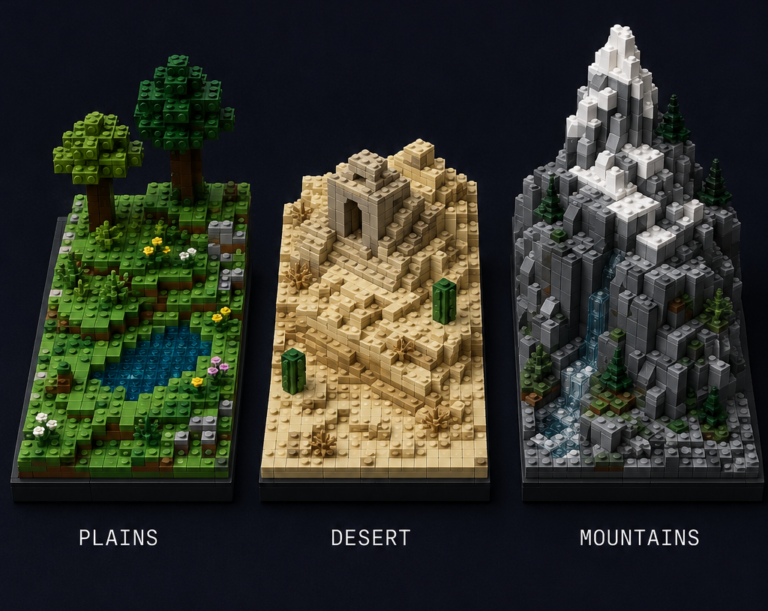
Oak and spruce wood dominate these regions, with birch appearing in forest variants. Surface coal and iron ore spawn frequently. Animals like cows, pigs, chickens, and sheep make these biomes your best bet for establishing sustainable food sources. In taiga specifically, watch for sweet berry bushes—the berries provide quick food and can be replanted.
Structures and Points of Interest
Villages appear commonly in plains and occasionally in taiga, offering potential trading opportunities and ready-made shelter. Cave entrances dot the landscape, providing access to underground mining. Understanding Minecraft biomes helps you recognize the specific variants you’re encountering and their unique characteristics.
For builders, taiga biomes offer distinct architectural opportunities with their combination of spruce wood and snow-dusted aesthetic.
Harsh Survival Biomes: Deserts, Badlands, and Savanna
These biomes challenge you with limited resources and environmental extremes. Water becomes precious, animals grow scarce, and the harsh landscape forces you to plan more carefully.
What to Bring
Extra food stacks top the priority list since animals spawn less frequently. Your water bucket becomes even more critical for creating water sources and irrigating any crops you plant. Bring plenty of torches—these exposed landscapes have excellent visibility, but night still brings hostile mobs. Extra pickaxes let you harvest the abundant exposed ores and unique blocks like terracotta.
Resources to Hunt
Desert biomes provide unique architectural materials including sand, sandstone, and cactus. In badlands, terracotta appears in naturally colored layers that rival any dye-based palette. These biomes excel for mining—exposed caves and mineshafts reveal coal, iron, and especially gold ore in massive quantities.
Structures Worth Finding
Desert temples offer loot and a puzzle element, though watch out for the pressure plate trap. Desert villages provide respite and trading. Pillager outposts challenge your combat skills but reward you with valuable items. Badlands sometimes contain fossil structures—rare underground formations worth documenting. The extensive mineshafts in badlands regions often produce more gold ore than anywhere else in the Overworld.
Snowy, Mountain, and Windswept Regions
Vertical terrain and freezing temperatures define these high-altitude biomes. The spectacular views come with genuine hazards—fall damage, powder snow traps, and challenging navigation.
What to Bring
Feather Falling boots mitigate the constant fall risk in mountainous terrain. Leather boots prevent powder snow from freezing you—a unique hazard in these biomes. Extra building blocks and scaffolding make vertical travel safer and faster. Mountain bases require specific planning due to the terrain challenges.
Resources to Discover
Mountains provide abundant coal and iron ore due to their height. Emerald ore spawns exclusively in mountain biomes, making them essential for serious trading operations. Goats drop horns when they ram blocks, creating unique decorative and functional items. Snow and ice blocks offer distinctive building materials.
Construction Opportunities
The dramatic elevation changes create spectacular building locations. Ridges and peaks offer panoramic views, while carved-out mountain halls provide naturally dramatic interior spaces. Mountain biome construction techniques help you work with rather than against the challenging terrain.
Dense Vegetation: Jungles, Swamps, and Mangroves
These waterlogged, overgrown biomes slow your movement but reward persistence with unique resources found nowhere else. Navigation becomes more difficult, but the payoff justifies the effort.
What to Bring
Extra food and tool durability matter here—you’ll burn through both faster in these dense biomes. Shears harvest vines quickly for decorative purposes. Boats become essential in swamps and mangroves where water covers much of the terrain. Bring extra torches since the thick canopy creates dark pockets even during daytime.
Exclusive Resources
Jungle biomes provide cocoa beans (essential for brown dye), bamboo (fast-growing and useful for scaffolding), melons, and jungle wood. Parrots and ocelots spawn only here. Swamp biomes offer slime spawning in specific chunks, plus lily pads and unique vegetation. Mangrove swamps provide mangrove wood, propagules for replanting, and mud blocks—a game-changing building material.
Structural Finds
Jungle temples hide in the dense foliage, requiring careful exploration to locate. Witch huts dot swamp biomes, often containing cats. The biomes’ distinctive building materials and atmospheric qualities make them worth the navigation challenges.
Oceanic Expeditions
Ocean biomes require fundamentally different preparation since you’re operating underwater or in boats for extended periods. The aquatic environment changes every rule.
What to Bring
A boat remains your primary transport, but bring materials for additional boats in case yours breaks. Doors create air pockets underwater for quick breathing breaks. Buckets empty water from enclosed spaces. Ideally, acquire respiration and aqua affinity enchantments for your helmet, or bring water breathing potions. Night vision potions dramatically improve underwater visibility.
Underwater Treasures
Ocean monuments challenge experienced players with guardians and elder guardians but reward you with prismarine blocks and sponges. Shipwrecks scatter across ocean floors containing treasure maps and other loot. Ocean ruins offer smaller but more frequent rewards. Warm oceans specifically host coral reefs—the only source of coral and tropical fish. Turtles nest on beaches adjacent to ocean biomes.
Biome Variants
Oceans come in temperature variants (warm, lukewarm, cold, frozen) that dramatically affect what spawns and what you’ll find. Warm oceans have coral; frozen oceans contain ice structures; deep ocean variants reach impressive depths and spawn different mobs.
The Nether: Hellish Preparation Required
The Nether dimension represents a dramatic shift from Overworld exploration. Every rule changes, and inadequate preparation leads to quick death.
Critical Gear
Wear at least one piece of golden armor to prevent piglin aggression—this single item changes the entire Nether experience. Fire resistance potions or enchantments prevent lava deaths, the most common Nether fatality. Bring several stacks of cobblestone for building safe paths across lava lakes and protecting yourself from ghast fireballs. Bows handle ranged threats like ghasts and blazes.
Nether Biomes and Resources
The Nether contains five distinct biomes, each with unique blocks and challenges. Nether fortresses spawn in any biome and contain blaze spawners (essential for brewing) and nether wart. Bastion remnants appear in all Nether biomes except basalt deltas, offering significant loot if you can navigate the piglin inhabitants.
Crimson and warped forests provide unique wood that doesn’t burn—invaluable for Nether construction. Soul sand valleys offer soul sand and soul soil for soul-based blocks. Nether materials enable distinctive building styles impossible in the Overworld.
Survival Essentials
Nether survival requires specific strategies beyond normal exploration. Create safe paths immediately, mark your portal location clearly, and never dig straight down. Bring enough resources to reconstruct your portal if it gets damaged or you need to create an emergency exit.
The End: Final Frontier
The End dimension requires preparation similar to the Nether but with different priorities. You’ll need to defeat the Ender Dragon eventually, but initial exploration focuses on the outer islands.
What to Bring
Slow falling potions prevent deadly falls into the void—the End’s most dangerous feature. Bring massive quantities of building blocks for bridging between islands. Ender pearls let you teleport short distances, useful for navigation. Pumpkins worn as helmets prevent Endermen aggression, though they limit visibility.
End City Rewards
End cities spawn on outer islands after defeating the dragon. These structures contain shulkers (source of shulker boxes) and valuable loot. End ships attached to some cities hold elytra—the ultimate transportation upgrade. Chorus plants provide chorus fruit for teleportation and purpur blocks for building.
Advanced Exploration Strategies
Coordinate Logging
Note coordinates (F3 on Java, settings on Bedrock) for every significant discovery: villages, temples, rare biomes, strongholds, and resource-rich areas. Create a physical or digital log with coordinates and brief descriptions. This habit saves countless hours trying to relocate interesting locations later.
Map Crafting System
Carry empty maps and fill them as you explore, creating a physical record of your discoveries. Locator maps show your position, while standard maps create permanent records you can place in item frames to build a wall-sized world map at your base.
Resource Tracking
Comparing biome resources systematically helps you prioritize which biomes to explore based on your current needs. Need bamboo? Jungle. Want terracotta? Badlands. Hunting emeralds? Mountains. Understanding the resource distribution guides efficient exploration.
Seed Selection
Choosing seeds strategically lets you spawn near multiple desirable biomes, reducing exploration time. Seeds with nearby villages, multiple biomes in close proximity, and interesting terrain features jumpstart your world effectively.
When Exploration Becomes Building
Exploration often reveals the perfect spot for your next project. Best spawn biomes offer certain advantages, but the right biome for building depends on your architectural style and resource needs.
🗺️ Minecraft Biome Comparison Chart
Compare resources, structures, and difficulty across all biomes
| Biome | Dimension | Difficulty | Key Resources | Structures | Building Potential | Food Availability |
|---|
Forest biomes provide abundant wood and natural camouflage for organic builds. Cold biomes enable Nordic-inspired architecture with their snow and ice aesthetic. Each biome suggests certain architectural approaches based on available materials and visual themes.
Making Exploration Sustainable
Setting Up Forward Bases
For extended exploration, establish small outposts in distant biomes. A bed, crafting table, furnace, and chest containing backup tools and food create a sustainable exploration loop. You can venture further from your main base without risking everything on a single trip.
Inventory Management
Bring an ender chest and keep valuable finds safe by storing them mid-exploration. If you die, the ender chest contents remain accessible from any other ender chest. This strategy works especially well when exploring dangerous areas like the Nether or when carrying rare items.
Return Trip Planning
Before venturing too far, establish clear landmarks or paths back home. Torches placed on one side of your trail create a reliable navigation system (torches on right going out means they’re on left coming back). Dirt pillars marked with torches visible from a distance work well in open biomes like plains and deserts.
Your Next Adventure
Minecraft exploration rewards preparation and curiosity equally. The right gear prevents frustrating deaths and resource shortages, while knowing what each biome offers helps you recognize opportunities when you find them. Whether you’re searching for that perfect building location, hunting rare resources, or simply documenting every biome variant, this checklist ensures you’re ready.
Start with nearby biomes to test your exploration kit, then venture progressively further as your gear and experience improve. The world’s vastness guarantees you’ll discover something new every expedition—ruins you’ve never seen, biomes you’ve only read about, or the perfect spot for your next architectural masterpiece.
What biome are you planning to explore next? The choice matters less than the preparation you bring to it.