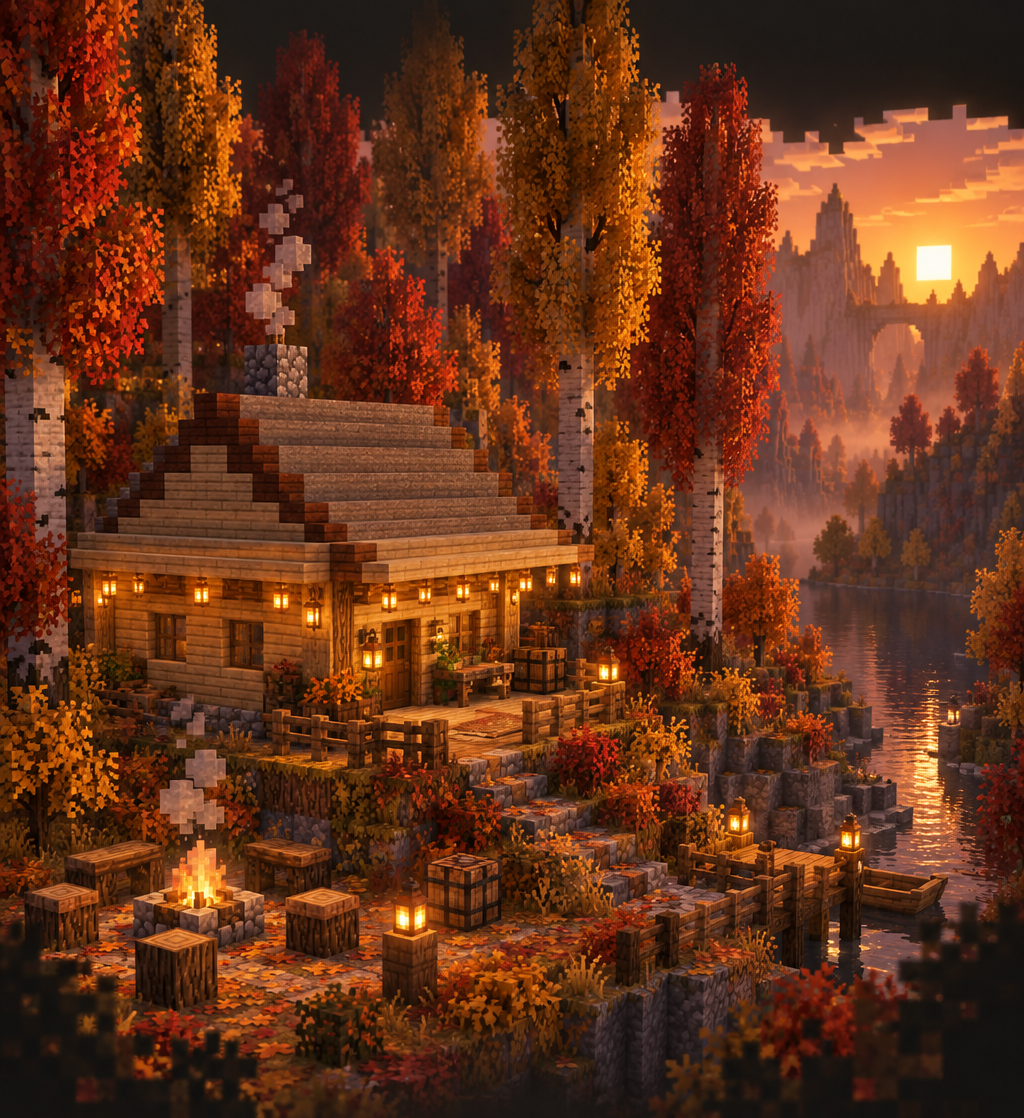
Somewhere between a snowy taiga and a cherry grove, Minecraft is about to get its first proper autumn. The Dappled Forest is the centrepiece of the Wilderness Bound drop (Java 26.3), and if the pre-release builds are anything to go by, it’s the best excuse builders have had in years to finally use every colour of stair and slab in the game at once. Here’s what’s actually landing, what it means for your builds, and how to get ahead of the rush before everyone’s world is full of orange poplar roofs.
🍂 What’s new in the Dappled Forest (as currently previewed)
Wilderness Bound is officially confirmed for 15 September 2026, and Mojang has been clear that the Dappled Forest is the flagship biome of the update. As of this writing the build is still in its final pre-release stage, so treat the specifics below as “as currently previewed” rather than locked-in final values, per Mojang’s own note that features remain subject to change until launch.
With that caveat out of the way, here’s what the pre-release build actually contains:
- Poplar trees in three leaf colours: red, orange and yellow, generated randomly with no way to influence which colour a sapling grows into.
- Light tan poplar logs, a new wood type separate from anything currently in the game.
- Red shrubs, leaf litter, brown mushrooms and shelf mushrooms, which scatter the forest floor and give the biome its unkempt, wild-camp feel.
- Occasional spruce trees breaking up the poplar canopy, which is one of the easiest ways to tell you’ve found a Dappled Forest rather than a cherry grove.
- The Abandoned Camp structure, generating across several biomes including this one, dressed differently depending on where it spawns.
The biome reads as rust-toned and slightly wild rather than manicured, closer to a real-world deciduous forest in October than anything Minecraft has generated before.
🪵 Poplar wood and the new colour palette unlocked
Poplar wood crafts into the full standard set builders expect: planks, stairs, slabs, doors, trapdoors, fences, gates, signs, buttons and pressure plates. The plank tone sits somewhere between birch and acacia, pale and slightly warm, which is exactly why it works so well against the leaf colours it generates alongside.
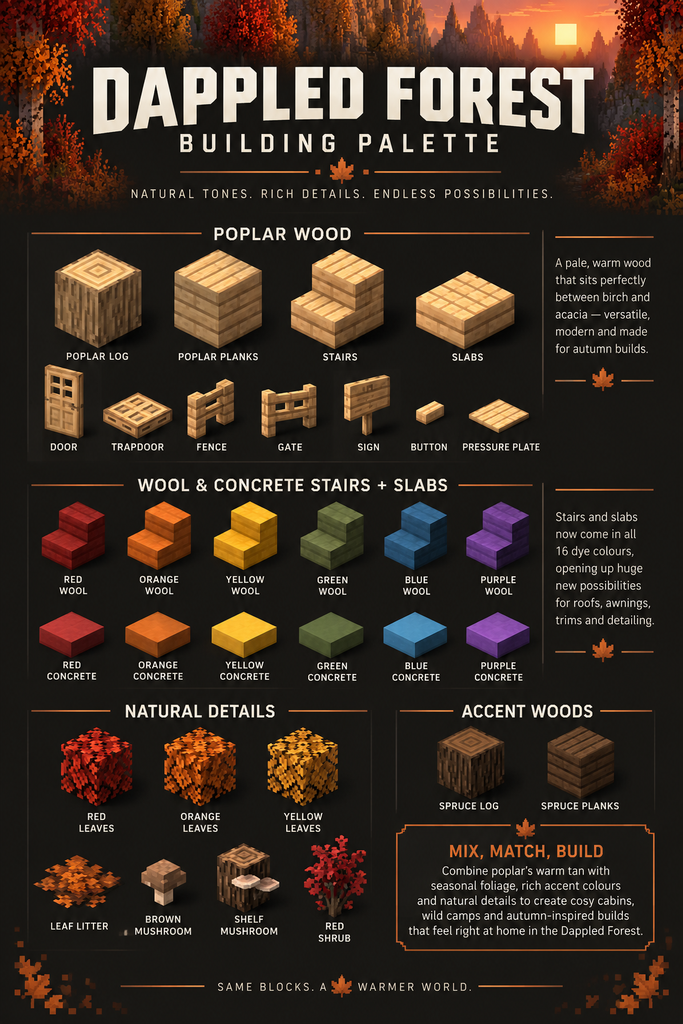
The bigger unlock for builders isn’t the wood on its own though. Wilderness Bound also adds stairs and slabs for wool and concrete in all 16 dye colours, something the building community has wanted for years. Combine those with straw beds (three hay bales, no crafting table needed) and cushions (three wool slabs of one colour, or looted from a camp), and you suddenly have a huge amount of soft-good detail to work with.
Why this matters for anyone building rather than just surviving:
- Full-colour stairs and slabs mean gradient roofing, striped awnings and detailed textile-style trims are finally possible without resorting to dye-limited terracotta or concrete powder workarounds.
- Cushions and straw beds give interiors a lived-in, textile-heavy look that Minecraft has always struggled to convey with hard blocks.
- Poplar’s pale, warm plank tone is a genuinely new middle ground between the cool tones of birch and the saturation of acacia, useful well beyond this one biome.
🎨 Autumnal, camp-style and mixed-warm-cool palette ideas
The reason this update is worth building around, rather than just visiting for the achievement, is the palette it hands you. Poplar’s warm tan sits naturally against red, orange and yellow leaves, and now that wool and concrete stairs exist in every colour, you can extend that warmth into roofing, furniture and trim without fighting the block list.
A few directions worth trying once the biome is out:
- Full autumnal builds: poplar planks and logs as the primary structure, with orange and red wool or concrete stairs layered into roofs and awnings to echo the falling leaves around the build.
- Camp-style aesthetics: lean into what the Abandoned Camp already does well, canvas-look wool tents, straw beds, cushions and open fire pits, scaled up into a proper basecamp rather than a single tent.
- Mixed warm-cool contrast: pair poplar’s warm tones against the cooler blues and whites of a nearby snowy taiga or frozen peak, since the biome tends to generate right on that border anyway. That boundary is a natural spot for a build that deliberately straddles both palettes.
None of this requires exotic materials. It’s the same building logic as any good palette-led build: pick two or three dominant tones, let one wood type carry the structure, and use the new stair and slab colours as accents rather than filling every surface with them.
⛺ The Abandoned Camp: what’s inside and how to steal the look
Abandoned Camps are small structures made largely from wool stairs, generating across roughly eighteen surface biomes, each one reskinned to suit its surroundings. In the Dappled Forest specifically, camps pick up poplar wood framing, scattered leaf litter and shelf mushrooms growing off the structure itself.
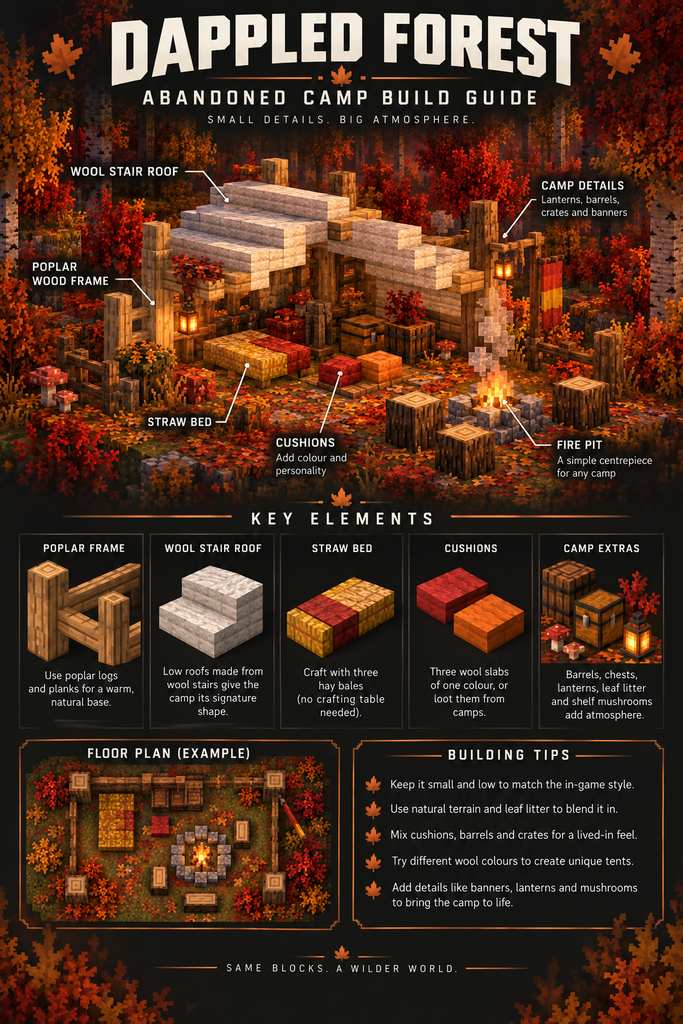
Inside, expect the following:
- Wool stair tents, usually white or a muted neutral, forming the main shelter shape.
- Straw beds and cushions, both craftable yourself once you know the recipe, but worth looting first for a head start.
- Chests and barrels, some of which conceal a copper chest with better loot, including potions, iron gear and explorer maps pointing to other structures.
- Small utility touches, cooking fires, scattered tools, the kind of detail that makes a camp look inhabited rather than placed.
For builders, the camp is less a destination and more a reference sheet. The tent silhouette, the low-slung wool stair roofline and the mix of straw and cushions inside are all things worth copying directly into a larger build. Scale one tent up into a proper cabin, or cluster several loosely around a fire pit the way the generated camps already do, and you’ve got a basecamp that reads as authentically “found” rather than architect-designed.
🧭 Practical tips for finding and settling the biome
The Dappled Forest doesn’t generate near regular forests or woodlands, which catches a lot of players out. Instead, it sits adjacent to cold biomes, bordering taiga, snowy taiga and the edges of mountains with frozen peaks, as well as turning up next to plains and cherry groves.
A few tips for tracking one down and getting settled once you’re there:
- Walk the taiga perimeter. If you’re exploring on foot rather than using a seed map, head for the nearest taiga or snowy taiga and follow its edge; the Dappled Forest tends to border it directly.
- Use /locate if you’re not fussed about the walk. It’ll give you exact coordinates for the nearest instance in survival worlds where commands are allowed.
- Build your first shelter from what’s on the ground. Poplar logs and leaf litter are immediately available, so a basic shell doesn’t require importing materials.
- Loot the nearest camp before committing to a build site. A quick raid gets you straw beds and cushions without spending resources you’d rather put into the structure itself.
- Watch for the terrain shift at the biome edge. Because it borders cold biomes so consistently, your build site will often have a natural gradient from forest floor to snowy ground worth designing around rather than flattening.
🌲 Dappled Forest vs the standard Overworld forest
It’s worth being precise about this because the names invite confusion. The regular Overworld forest biome is the long-standing oak-and-birch woodland most players already know, and it’s not changing with this update. If you want ideas for treehouse cities or general woodland architecture in that biome, our forest biome building guide already covers it in depth.
The Dappled Forest is a distinct, brand-new biome with its own generation rules, its own wood type and its own colour identity. It won’t replace or blend into existing forests, and it won’t generate in the same locations. Treat it as a new entry in your biome list rather than a reskin of something you already know, and check our complete guide to Minecraft biomes if you want the full picture of how it fits alongside everything else the game generates.
If your build site straddles the border between the Dappled Forest and something less cooperative, our terraforming guide has techniques for reshaping the transition without losing the natural look that makes this biome worth building in to begin with.
Wilderness Bound is close enough now that it’s worth prepping ahead of launch: scout a few Dappled Forest candidates on your existing seed, sketch out a palette, and you’ll be building with poplar and full-colour stairs the moment 26.3 goes live.