Picture this: You’re standing in the Lego aisle, torn between a colorful Creator Expert set showcasing architectural beauty and a complex Technic model bristling with gears and motors. Both call to different aspects of your building passion, but which path should you choose? Many adult builders assume they must pick one approach over the other, but the reality is far more nuanced and exciting.
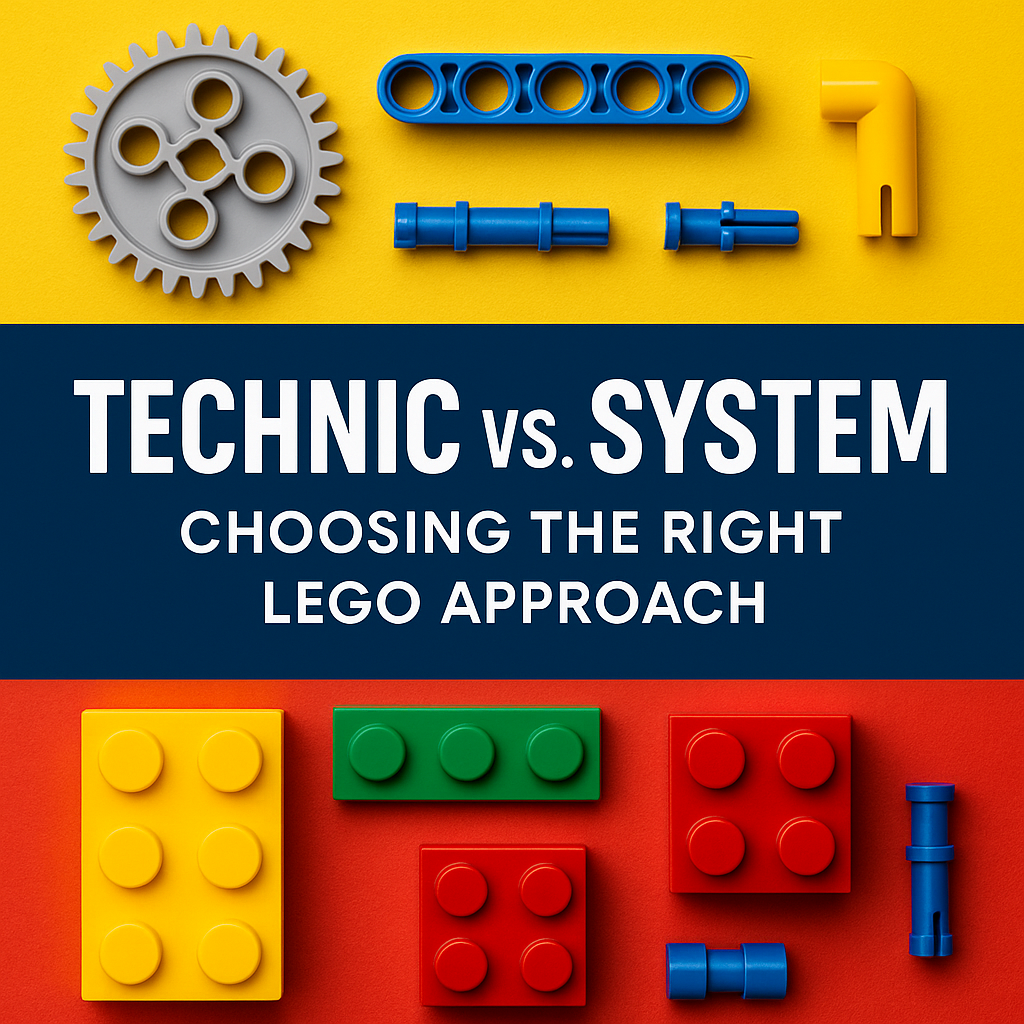
The choice between Lego System and Technic building isn’t about right or wrong—it’s about understanding which approach aligns with your goals, interests, and projects. Whether you’re drawn to aesthetic creativity or mechanical precision, this guide will help you make informed decisions about your building journey and discover how both systems can enhance your adult building experience.
“The best builders don’t limit themselves to one system—they master both and know when to use each approach for maximum impact.”
What is Lego System Building?
Lego System building represents the traditional approach that most people associate with Lego construction. At its core, System building relies on the classic brick-on-brick methodology where elements connect through studs and anti-studs, creating the satisfying “clutch power” that makes Lego so distinctive.
Core Principles of System Building
The foundation of System building rests on standardized measurements where every element relates to the basic 1×1 brick unit. This creates incredible versatility—a 2×4 brick occupies the same space as eight 1×1 bricks, allowing builders to achieve the same structural result through different approaches. This modularity enables the creative flexibility that System building is famous for.
System construction prioritizes aesthetic results and architectural principles. Builders focus on proportion, color harmony, and visual impact. The approach encourages artistic expression, whether you’re recreating real-world architecture or designing fantastical structures that exist only in your imagination.
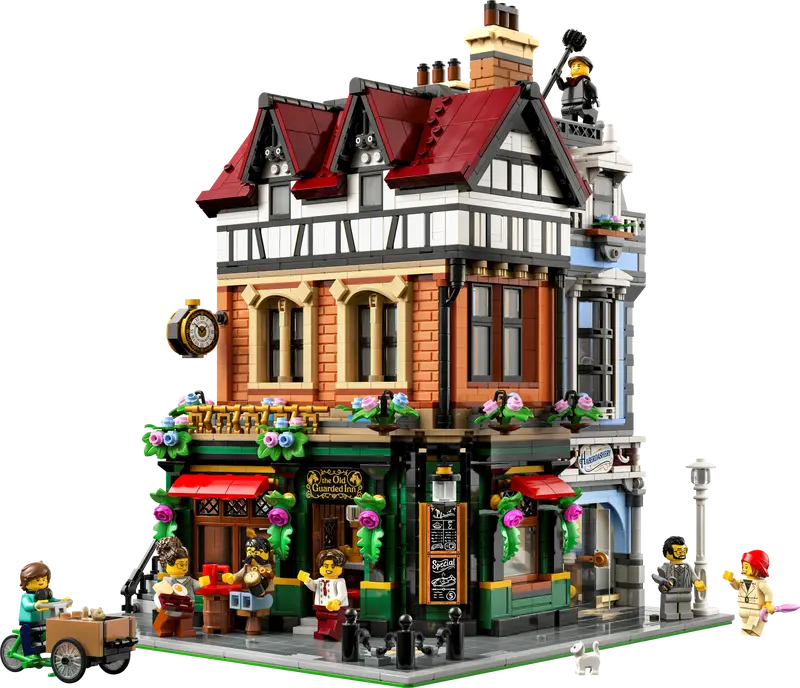
View the Tudor Corner set on LEGO.com
Key Components and Building Methods
Standard System building utilizes familiar elements: traditional bricks, plates (which are one-third the height of bricks), slopes for smooth angles, and thousands of specialized pieces like windows, doors, and decorative elements. As builders advance, they often discover SNOT techniques (Studs Not On Top), which allow for more sophisticated detailing by orienting bricks in multiple directions.
The beauty of System building lies in its intuitive nature. You can visualize your creation as you build, making adjustments and improvements along the way. This organic building process suits creators who enjoy experimenting and iterating on their designs.
Building Philosophy and Scale
System builders typically work at specific scales that relate to real-world proportions. Minifig scale creates buildings sized for Lego minifigures, while microscale allows for entire cities in compact spaces. The scale choice influences every design decision, from door sizes to overall proportions.
What is Lego Technic Building?
Lego Technic represents a fundamentally different philosophy focused on mechanical engineering and functional design. Rather than aesthetic appeal, Technic prioritizes working mechanisms, structural integrity, and real-world engineering principles.
Core Principles of Mechanical Construction
Technic construction uses a pin-and-hole system where specialized beams connect through friction pins rather than traditional stud connections. This creates incredibly strong structures capable of handling stress from moving parts, motors, and mechanical forces that would destroy traditional System builds.
The Technic approach demands precision and planning. Unlike System building where you can build organically, successful Technic models require understanding of mechanical principles like gear ratios, structural load distribution, and power transmission. Every connection serves a specific engineering purpose.

View the Ferrari FXX K set on LEGO.com
Key Components and Mechanical Elements
Technic builds utilize beams as primary structural elements, available in various lengths with holes spaced at standard intervals. Pins in different varieties (friction pins for permanent connections, smooth pins for moving joints) create the connections. Gears, axles, motors, and pneumatic components enable complex mechanical functions.
The component system allows for incredible mechanical complexity. Builders can create working transmissions, sophisticated suspension systems, and remote-controlled vehicles that rival commercial toys in functionality. The precision required teaches real engineering concepts transferable to professional applications.
Engineering Philosophy
Technic building follows engineering logic rather than aesthetic impulses. Form follows function, with every element serving a mechanical purpose. This approach appeals to builders who love understanding how things work and enjoy the challenge of creating mechanisms that perform specific tasks reliably.
Head-to-Head Comparison: System vs. Technic
Understanding the practical differences between these approaches helps builders choose the right method for specific projects and personal preferences.
Learning Curve and Complexity
System Building Advantages: System building offers an intuitive learning experience that most people can grasp immediately. The visual nature of traditional brick construction means you can see your progress and make corrections easily. Instructions are typically straightforward, showing exactly how pieces fit together. Mistakes are forgiving—if something doesn’t look right, you can usually adjust it without rebuilding entire sections.
The creative process feels natural and encourages experimentation. You can start building without extensive planning and let your design evolve organically. This flexibility makes System building particularly satisfying for stress relief and creative expression.
System Building Challenges: While easy to start, System building can become complex when tackling large structures or advanced building techniques. Structural limitations become apparent in large builds where traditional connections can’t handle the stress. Advanced techniques like complex SNOT applications require significant practice to master.
Technic Building Advantages: Technic offers a logical, engineering-based approach that provides transferable knowledge about mechanical systems. Once you understand gear ratios and structural principles, you can apply these concepts to increasingly complex builds. The systematic nature means that properly planned Technic models are incredibly robust and reliable.
The precision required develops valuable problem-solving skills and attention to detail. Many Technic builders find the mechanical aspect deeply satisfying, especially when creating working models that perform exactly as intended.
Technic Building Challenges: The initial learning curve is steep, requiring understanding of engineering concepts before you can build successfully. Instructions can be complex, especially for motorized models with multiple interconnected systems. Mistakes often require substantial rebuilding, making the trial-and-error approach less practical.
The focus on function over form can frustrate builders primarily interested in aesthetic results. Technic models often look utilitarian rather than beautiful, which may not satisfy builders seeking artistic expression.
Cost Considerations and Value Analysis
System Building Economics: System building typically offers lower entry costs and more budget-friendly experimentation opportunities. Basic building supplies are relatively inexpensive, and the wide variety of price points means builders can start small and expand gradually. The better cost-per-piece ratio in most System sets provides excellent value for bulk building.
The forgiving nature of System building means fewer expensive mistakes. If a technique doesn’t work, you can usually salvage most pieces for other projects. The huge secondary market for System pieces keeps costs manageable for specific elements.
Technic Investment Requirements: Technic building demands higher initial investment, particularly for motorized models. Specialized pieces like motors, sensors, and complex gears cost significantly more than basic bricks. However, these specialized components often provide better long-term value for builders focused on mechanical projects.
The precision required in Technic building means fewer wasted pieces, but mistakes can be more costly to correct. Motors and electronics represent significant investments that must be protected and used carefully.
System vs Technic: Cost Comparison
Understanding the investment differences between building approaches
System Building
Technic Building
Investment Timeline
Immediate building
Month 2-6
Learning phase
Year 1+
Per piece average
Windows, doors, slopes
Per motor unit
Advanced components
© Bricks and Blocks Creative | Cost estimates based on 2025 market prices
Project Applications and Ideal Use Cases
System Building Excels For:
- Architectural models and building recreations
- Display-focused models emphasizing visual impact
- Artistic and sculptural MOCs (My Own Creations)
- Vehicles where appearance matters more than function
- Large-scale projects like cities or landscapes
- Projects involving detailed interior design concepts
Technic Building Excels For:
- Working vehicles with functional steering, suspension, and drivetrains
- Mechanical demonstrations and engineering projects
- Remote-controlled models with complex behaviors
- Models requiring precise movement or automation
- Educational projects teaching engineering concepts
- Collaborative projects where multiple builders work on mechanical systems
When to Choose Each Approach
The decision between System and Technic building ultimately depends on your personal interests, project goals, and building philosophy.
Building Technique Comparison Chart
System vs Technic Methods – Quick Reference Guide
System Building
- Standard bricks (2×4, 2×2, 1×1)
- Plates (1×6, 2×4, etc.)
- Basic slopes
Technic Building
- Technic beams (various lengths)
- Friction pins
- Axles and connectors
SNOT (Studs Not On Top)
- Headlight bricks
- Modified plates with studs on side
- Bracket pieces
- Travis bricks
Cross-Bracing & Reinforcement
- Long Technic beams
- Angle connectors
- Cross blocks
- Liftarms
Hidden Mechanisms
- Hinge pieces
- Ball joints
- Turntables
- Sliding doors/windows
Motorized Systems
- Motors (M, L, XL)
- Gear wheels (8t, 24t, 40t)
- Differential
- Control hub & sensors
Color Blocking & Patterns
- Multiple colors in same shapes
- Tiles for smooth surfaces
- Printed elements
- Transparent pieces
Functional Aesthetics
- Panels and fairings
- Exposed gear systems
- Chrome/metallic elements
- LED lighting components
© Bricks and Blocks Creative | Building Technique Reference Guide 2025
Start with System Building If:
You’re primarily interested in creativity, aesthetics, and architectural design. System building suits builders who enjoy the artistic aspects of construction, want to recreate real-world buildings, or prefer the flexibility to experiment and iterate on designs. If you’re drawn to color coordination and visual composition, System building provides the perfect creative outlet.
System also works well for builders who want immediate visual satisfaction and enjoy the meditative aspects of building. The forgiving nature makes it ideal for stress relief and casual building sessions.
Choose Technic Building If:
You love mechanical systems, engineering challenges, and functional models. Technic appeals to builders fascinated by how things work and who enjoy the precision required for successful mechanical design. If you have a background in engineering or enjoy projects that teach technical concepts, Technic provides intellectually stimulating challenges.
Technic also suits builders who prefer structured approaches with clear objectives. The systematic nature appeals to people who like following logical progressions and seeing measurable results.
Consider Both Approaches If:
You want maximum versatility and building options. Many experienced builders find that combining System and Technic knowledge creates the most satisfying building experiences. Understanding both systems allows you to choose the optimal approach for each project rather than forcing every build into one methodology.
Hybrid Building: Best of Both Worlds
Advanced builders increasingly combine System and Technic approaches to achieve results impossible with either system alone. This hybrid approach uses Technic structural frameworks with System aesthetic cladding, creating models that are both mechanically sophisticated and visually appealing.
Successful Integration Strategies
The most effective hybrid builds start with Technic mechanical cores providing structure and function, then use System elements for detailed exterior appearance. This approach is evident in many Creator Expert sets, which feature working functions built on Technic frameworks but finished with System elements for visual appeal.
Consider a sports car model: Technic beams create the chassis with working steering and suspension, while System slopes and plates create the smooth, curved bodywork. Neither system alone could achieve this combination of function and form.
Community Acceptance and Innovation
The adult building community enthusiastically embraces hybrid techniques, recognizing that the best builders use whatever methods achieve their vision. Online communities showcase increasingly sophisticated examples of System-Technic integration, pushing both systems beyond their traditional boundaries.
Many official Lego sets now incorporate hybrid approaches, demonstrating that the company itself recognizes the value of combining these methodologies for optimal results.
Getting Started: Recommendations for Both Systems
System Building Entry Points
For System building, start with Creator 3-in-1 sets that demonstrate fundamental techniques while providing multiple building challenges from one set. Sets like the Creator Expert line teach advanced System techniques while creating display-worthy models.
Consider investing in basic building elements: standard bricks in common colors, a variety of slopes and plates, and essential building tools for separating pieces efficiently. This foundation supports countless original projects.
Technic Exploration Options
Begin Technic building with medium-sized sets that introduce mechanical concepts without overwhelming complexity. Sets featuring basic gear systems or simple motorized functions provide excellent learning opportunities without requiring major investment.
Focus on understanding core principles rather than jumping into the most complex models. Master basic mechanical connections and gear ratios before attempting advanced projects with multiple motors and sensor systems.
Budget-Conscious Approaches
Both systems can be explored affordably through careful set selection and secondary market purchasing. Many builders successfully develop skills using basic elements before investing in specialized or expensive components.
Consider joining adult building communities where experienced builders share advice, techniques, and sometimes spare parts. The collaborative nature of adult building communities provides invaluable support for builders exploring new approaches.
Conclusion: Building Your Path Forward
The choice between Lego Technic and System building doesn’t have to be exclusive. Both approaches offer unique rewards and can complement each other in surprising ways. System building provides creative freedom and aesthetic satisfaction, while Technic offers engineering challenges and mechanical precision.
Your building journey might start with one approach but evolve to incorporate elements from both systems as your skills and interests develop. The key is understanding what motivates your building passion and choosing approaches that align with your goals.
Consider starting with the system that most appeals to your current interests, then gradually explore the other approach as curiosity and confidence grow. Many of the most accomplished builders seamlessly blend both methodologies, creating projects that showcase the best aspects of each system.
Take Action: Browse through our building fundamentals guides to develop skills that apply across both building systems, and don’t forget to check out our comprehensive Lego glossary for technical terms that will enhance your building vocabulary.
Which building approach speaks to you more—the creative freedom of System building or the mechanical precision of Technic? Share your experience with both systems in the comments below, and let us know what projects you’re planning next!